The Antibiotic Resistance Crisis: Why You Must Never Stop Your Prescription Early
The Cellular Biology of Superbugs, Bacterial Persisters, Minimum Inhibitory Concentrations, and the Life-or-Death Importance of Completing Your Full Antimicrobial Course
The Cellular Biology of Superbugs, Bacterial Persisters, Minimum Inhibitory Concentrations, and the Life-or-Death Importance of Completing Your Full Antimicrobial Course
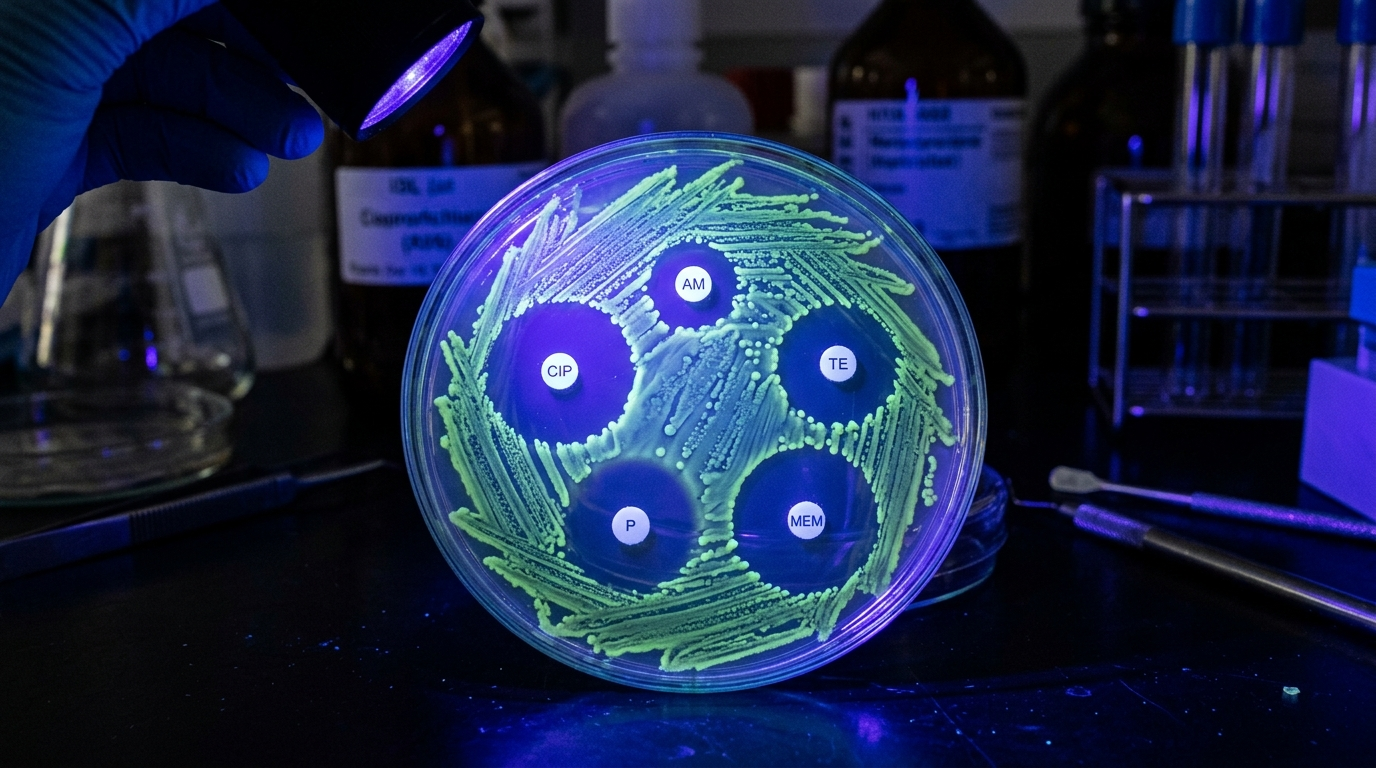
1. The Three-Day Temptation: Why Patients Abandon Their Antibiotic Bottles
It is a universal human experience: you fall ill with a raging strep throat, an acute bacterial sinus infection, or a painful urinary tract infection. Fever, chills, and debilitating pain leave you bedridden. Your doctor evaluates your symptoms, confirms a bacterial etiology, and writes a prescription for a 7-day or 10-day course of an oral antibiotic.
You start taking the medication diligently. Within 48 to 72 hours, an almost miraculous transformation occurs: your fever breaks, your throat stops aching, your energy returns, and you feel virtually back to normal. Looking at the medicine bottle, you realize you still have four full days of pills remaining. An internal voice whispers: "Why should I keep swallowing powerful chemical pills if I am already cured? Why risk an upset stomach or diarrhea? Why not save the rest of the bottle in the cabinet just in case someone else gets sick?"
Yielding to this three-day temptation is one of the single most dangerous mistakes a patient can make. What feels like a complete clinical recovery on the surface is often a dangerous biological illusion. Beneath the surface, billions of resilient bacterial pathogens remain alive, regrouping, mutating, and learning how to defeat the very medicine meant to destroy them.
2. Cellular Warfare: How Antibiotics Attack Cell Walls, Ribosomes, and DNA
To comprehend why bacterial infections require sustained multi-day antimicrobial exposure, one must understand how antibiotics exert their lethal effects on microscopic organisms.
Unlike human cells, bacteria are enclosed within a rigid protective peptidoglycan mesh called a cell wall. Beta-lactam antibiotics (such as amoxicillin, cephalexin, and penicillin) target and disable the transpeptidase enzymes responsible for cross-linking this wall. As bacteria attempt to grow and divide, the weakened cell wall ruptures under internal osmotic pressure, causing the bacterium to burst and lyse.
Other antibiotic classes attack internal bacterial machinery: macrolides (such as azithromycin) and tetracyclines bind to bacterial 50S or 30S ribosomal subunits, halting protein synthesis and freezing bacterial reproduction (bacteriostatic action). Fluoroquinolones (like ciprofloxacin) inhibit DNA gyrase and topoisomerase IV, shattering bacterial genetic material. Regardless of the mechanism, these processes require continuous, sustained drug concentrations in tissues over time to completely eradicate the microbial population.
3. The Bacterial Bell Curve: Why the Strongest Pathogens Die Last
In any active clinical infection, a patient does not harbor a homogenous colony of identical clones; they harbor a diverse population of millions or billions of individual bacterial cells displaying a natural bell curve of biological susceptibility.
During the first 24 to 48 hours of antibiotic therapy, the drug quickly kills the most vulnerable, susceptible bacteria—which constitute 80% to 90% of the population. Because the massive microbial biomass has been slashed, the patient's inflammatory cascade cools down, fever vanishes, and acute symptoms evaporate. The patient feels completely healed.
However, the surviving 10% of bacteria are the toughest, hardiest individuals possessing thicker membranes, slightly more efficient efflux pumps, or lower metabolic rates. Crucially, a subset known as "bacterial persisters" shut down their active metabolism entirely, entering a dormant, spore-like state that ignores cell-wall synthesis inhibitors. If you stop taking your antibiotic on day three, these hyper-resilient survivors wake up, resume rapid replication, and repopulate the infection with an entirely resistant progeny. When the infection flares back up a week later, the original antibiotic will be completely useless!
The Biological Bell Curve
The easiest bacteria die in the first 48 hours. The toughest, most resistant pathogens survive until days 5, 7, or 10. Stopping early spares the strongest bacteria and breeds incurable infections.
4. The Rise of the Superbug: Beta-Lactamases, Efflux Pumps, and Plasmid Transfer
When bacteria survive sub-lethal antibiotic exposure, they evolve defenses with astonishing speed through mechanisms that represent a masterclass in microbial adaptability:
1. Enzymatic Inactivation: Bacteria evolve enzymes that physically dismantle the antibiotic molecule. The most notorious are beta-lactamases (and extended-spectrum beta-lactamases, or ESBLs), which slice open the four-membered beta-lactam ring of penicillins and cephalosporins, neutralizing their bactericidal activity before they touch the cell wall.
2. Efflux Pumps: Resistant bacteria synthesize specialized protein pumps in their cell membranes that actively vacuum out antibiotic molecules as fast as they diffuse inward, keeping internal drug concentrations below the Minimum Inhibitory Concentration (MIC).
3. Target Modification: Microbes mutate the shape of their internal ribosomes or enzymes so that the antibiotic can no longer dock, while preserving normal cellular function.
4. Horizontal Gene Transfer: Most terrifyingly, bacteria do not keep these resistance mutations to themselves. They package resistance genes onto circular rings of DNA called plasmids and transfer them directly to unrelated bacteria through bacterial conjugation—essentially passing microscopic survival blueprints across species!
5. The Global AMR Crisis: Why Routine Infections Could Become Untreatable
Antimicrobial resistance (AMR) is no longer a future theoretical threat; it is an active global health catastrophe. Pathogens like Methicillin-Resistant Staphylococcus aureus (MRSA), Carbapenem-Resistant Enterobacteriaceae (CRE), and Multidrug-Resistant Tuberculosis (MDR-TB) already kill over 1.2 million people directly every year.
According to landmark global epidemiological reviews commissioned by the UK government and the WHO, if current trends in antibiotic misuse continue, AMR will cause over 10 million deaths annually by the year 2050—surpassing cancer as a primary cause of human mortality and costing the global economy over $100 trillion.
In a post-antibiotic world, routine medical procedures that modern society takes for granted would become perilous gambles: routine cesarean sections, hip replacements, dental extractions, and cancer chemotherapy (which temporarily destroys immune defenses) would carry unacceptably high fatality rates from simple opportunistic bacterial infections.
“The time may come when penicillin can be bought by anyone in the shops. Then there is the danger that the ignorant man may easily underdose himself and by exposing his microbes to non-lethal quantities of the drug make them resistant.”
— Sir Alexander Fleming, Nobel Lecture, 1945
6. The Medicine Cabinet Hazard: Why You Must Never Hoard Leftover Pills
When patients abandon an antibiotic course halfway through, they frequently stash the remaining tablets in their home medicine cabinet. Months later, when they or a family member develop a sore throat or common cold, they self-administer these leftover pills.
This practice carries immense clinical risks: first, over 90% of acute upper respiratory infections (common colds, influenza, viral bronchitis) are caused by viruses. Antibiotics have absolutely zero biological activity against viruses! Taking antibiotics for a viral infection exposes your body to allergic risks and gut microbiome destruction with zero therapeutic benefit.
Second, a partial bottle of 4 or 5 tablets is incapable of eradicating a true bacterial infection anyway; it merely exposes pathogens to an incomplete dose, accelerating resistance. Third, antibiotics degrade over time, particularly liquid suspensions or tetracyclines, which can decompose into nephrotoxic chemical byproducts. Leftover antibiotics must be disposed of safely through pharmacy drop-boxes, never hoarded.
7. Modern Evidence-Based Stewardship: Is Shorter Really Better?
In recent years, infectious disease specialists have spearheaded a scientific evolution called "Antibiotic Stewardship". Groundbreaking clinical trials have demonstrated that for many routine infections (such as uncomplicated community-acquired pneumonia, acute otitis media, or simple urinary tract infections), shorter courses—such as 3 to 5 days of high-potency therapy—are just as effective as traditional 10-to-14-day courses, with significantly fewer side effects and lower rates of resistance.
However, this modern guideline has a crucial caveat: shorter courses must be pre-determined and calculated by scientific evidence and prescribed by a licensed clinician—never decided on a whim by a patient who feels better on day three! When a doctor writes a 5-day course today, that 5 days has already been optimized; stopping on day two remains disastrous. Always complete the exact duration specified on your pharmacy label.
8. Actionable Patient Rules: How to Take Antibiotics Responsibly
Every individual can act as a steward of global health. Follow these five fundamental rules whenever you are prescribed an antimicrobial therapy:
Rule 1: Finish every single pill. Even if your fever is gone and you feel 100% energetic, continue taking your medication until the bottle is completely empty, exactly as directed.
Rule 2: Never pressure your doctor for antibiotics. When diagnosed with a viral cold, flu, or bronchitis, ask for symptom-relief therapies rather than demanding an antibiotic that cannot cure your virus.
Rule 3: Maintain strict timing intervals. If your prescription says every 8 hours (TDS), take it at evenly spaced intervals (e.g., 7 AM, 3 PM, 11 PM) to prevent blood concentration dips that allow bacteria to rebound.
Rule 4: Protect your gut microbiome. Antibiotics can kill beneficial gut flora, leading to antibiotic-associated diarrhea. Ask your doctor or pharmacist if taking an evidence-based probiotic (such as Saccharomyces boulardii) spaced a few hours away from your antibiotic is appropriate for you.
Rule 5: Verify your prescription digitally. Using tools like Theprescription ensures you understand your exact antibiotic salt, appropriate food timing, and potential interactions with your other daily medications, keeping your recovery safe, swift, and complete.
In routine clinical practice, active patient engagement represents the single greatest safeguard against preventable medication errors. When individuals take time to review their prescription orders, verify the correct indications, and clarify all ambiguous instructions prior to leaving the medical clinic, treatment adherence improves dramatically while adverse drug reactions decline.
Key Clinical Takeaways for Patients
- Stopping an antibiotic course prematurely when acute symptoms subside kills only the most vulnerable bacteria, leaving hardier sub-populations to mutate and proliferate.
- Bacterial "persister cells" enter a dormant metabolic state during antibiotic exposure and require sustained antimicrobial pressure over multiple days to be eradicated.
- Antimicrobial resistance (AMR) is projected by the WHO to cause 10 million annual deaths globally by 2050 if stewardship and compliance are not strictly maintained.
- Leftover antibiotics should never be saved for future illnesses, shared with family members, or flushed into community water supplies.
- Modern evidence-based guidelines favor shorter, optimized courses tailored by clinical trials, but only your prescribing physician can safely adjust your treatment duration.
Medical Disclaimer: Medical Disclaimer: This article is published solely for educational, health literacy, and informational purposes. Theprescription is not a certified medical device and does not dispense medical advice. Patients must never alter, stop, or initiate prescription medications without direct clinical consultation with a licensed physician and dispensing pharmacist. Originally published on Theprescription.