Why Doctors Prescribe Antacids (PPIs) Along With Antibiotics and Painkillers
Gastroprotection Pharmacology: How NSAIDs and Antimicrobials Cause Gastritis, Why Omeprazole or Pantoprazole Are Co-Prescribed, and How to Prevent Long-Term PPI Dependency
Gastroprotection Pharmacology: How NSAIDs and Antimicrobials Cause Gastritis, Why Omeprazole or Pantoprazole Are Co-Prescribed, and How to Prevent Long-Term PPI Dependency
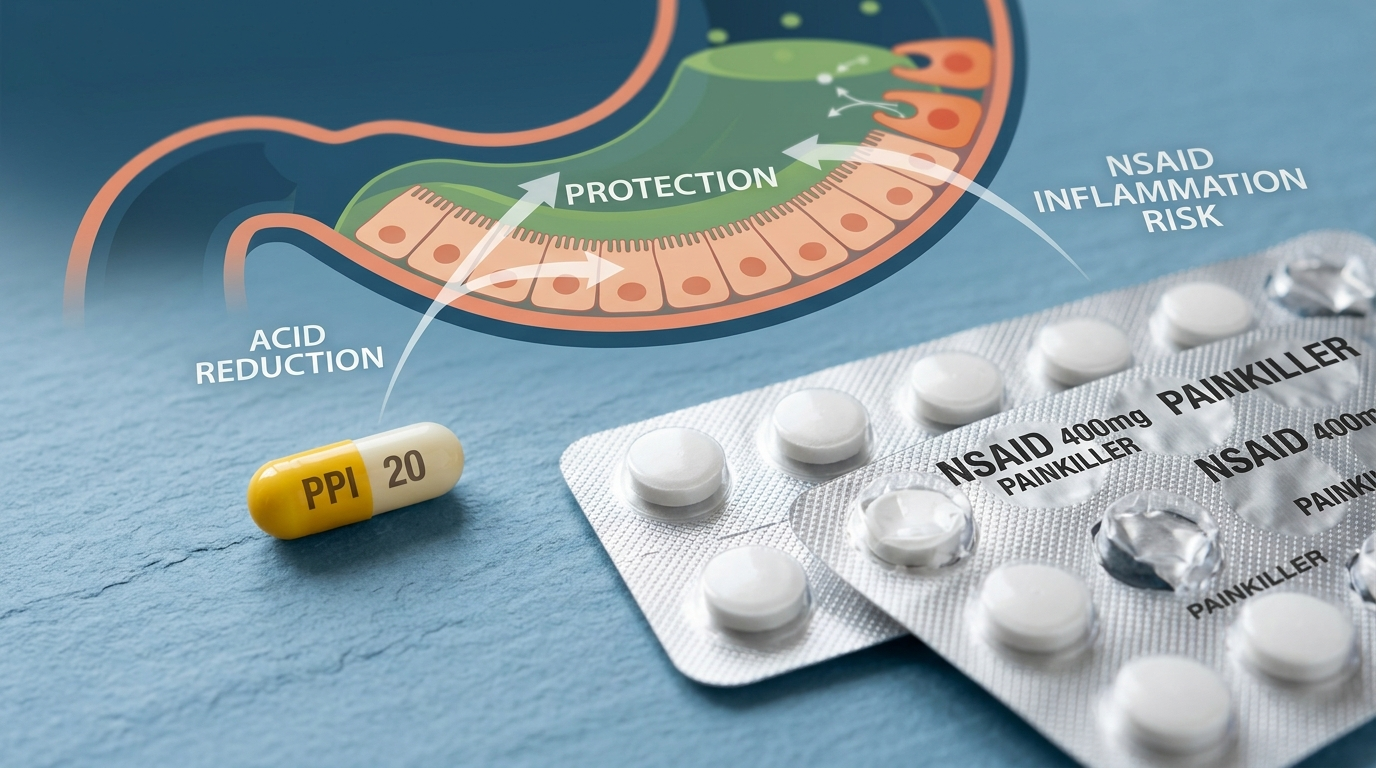
1. The Unexpected Third Pill: Why Am I Taking an Antacid for a Sprained Ankle?
A common scenario plays out in doctor clinics every day: a patient visits an orthopedic clinic for an acute sports sprain or an urgent care center for dental pain. The physician prescribes a strong anti-inflammatory pain reliever (such as diclofenac, naproxen, or aceclofenac) and perhaps an antibiotic. Yet when reading the prescription slip, the patient discovers a third unfamiliar medication: "Tab Pantoprazole 40mg 1 tab OD AC" or "Cap Omeprazole 20mg".
Patients frequently ask with confusion: "Doctor, I don't have acid reflux or heartburn—why did you prescribe me a stomach acid medicine?" Some patients even decide to skip the antacid entirely, believing the physician added it mistakenly or that taking an extra pill is unnecessary chemical overload.
This clinical decision—co-prescribing an acid-reducing agent alongside painkillers or antibiotics—is known in medicine as gastroprotection. Skipping this protective medication can transform a simple muscular injury into an emergency room nightmare of bleeding gastric ulcers, black tarry stools, and acute hemorrhagic shock. Understanding gastroprotection pharmacology reveals why this third pill is an indispensable clinical shield.
2. The Stomach's Armor: How Prostaglandins Protect Against Stomach Acid
To appreciate the threat posed by painkillers, one must understand how the human stomach survives its own internal environment. The stomach secretes concentrated hydrochloric acid (HCl) with a potent pH between 1.5 and 2.0—an acidic environment corrosive enough to dissolve zinc and digest tough meats.
Why doesn't the stomach digest itself? The gastric lining is defended by a sophisticated biological armor called the gastric mucosal barrier. Special surface mucus cells continuously secrete a thick, alkaline gel rich in bicarbonate ions that coats the stomach wall, maintaining a neutral pH of 7.0 directly at the cellular surface.
The master biological regulators orchestrating this protective armor are lipid compounds called prostaglandins (specifically PGE2 and PGI2). In the gastric mucosa, prostaglandins stimulate thick mucus secretion, boost alkaline bicarbonate production, enhance local mucosal microvascular blood flow (which rapidly delivers oxygen to heal micro-injuries), and directly suppress excessive gastric acid secretion by parietal cells. As long as prostaglandins are abundant, the stomach remains completely immune to acid injury.
3. The NSAID Assault: How Painkillers Cause Chemical Ulcers and Bleeding
Non-Steroidal Anti-Inflammatory Drugs (NSAIDs)—including ibuprofen, naproxen, diclofenac, ketorolac, and indomethacin—are powerful analgesics. They relieve swelling and pain by inhibiting cyclooxygenase (COX) enzymes, which convert arachidonic acid into pro-inflammatory prostaglandins.
However, there are two distinct COX isoforms: COX-2 is induced at sites of injury and produces pain and inflammation. But COX-1 is a "constitutive housekeeping" enzyme responsible for synthesizing the protective prostaglandins inside your stomach lining.
When you take a non-selective NSAID, it disables both enzymes. By wiping out COX-1, the drug completely shuts down protective prostaglandin synthesis in your stomach. Within hours, mucosal mucus thins, bicarbonate secretion plummets, and local blood flow withers. The stomach's corrosive hydrochloric acid and pepsin enzymes come into direct, unbuffered contact with bare gastric epithelial cells, eating through the tissue to create painful erosions, bleeding ulcers, and in severe cases, full-thickness stomach perforations.
Silent Ulcer Risk in NSAIDs
NSAID-induced stomach ulcers are notoriously "silent"—the pain-relieving property of the drug often masks stomach pain until the ulcer begins actively bleeding or ruptures. Gastroprotection is mandatory.
4. Antibiotic Irritation: Pill Esophagitis and Nausea with Antimicrobials
While NSAIDs attack prostaglandins systemically, many antibiotics provoke direct chemical irritation of the gastrointestinal mucosa:
1. Direct Caustic Irritation: Tetracycline antibiotics (such as doxycycline) are caustic chemical salts. If a doxycycline capsule lodges against the esophageal or gastric mucosa, it dissolves into an intensely acidic solution that burns local tissue, causing excruciating "pill-induced esophagitis" or gastritis.
2. Motilin Receptor Agonism: Macrolides (like erythromycin and azithromycin) bind to smooth muscle motilin receptors, triggering violent gastric contractions, severe nausea, and cramping.
3. Clavulanate Osmotic Irritation: Amoxicillin-clavulanate (Augmentin) frequently provokes upper abdominal distress and rapid gastric emptying due to clavulanic acid. Prescribing a PPI cushions the upper digestive tract, raises gastric pH, and significantly improves patient tolerance, ensuring the full antibiotic course is successfully completed.
5. Pharmacological Shields: How PPIs and H2 Blockers Shut Down Acid Pumps
To prevent stomach acid from corroding vulnerable mucosa during painkiller or antibiotic therapy, physicians deploy two main classes of acid-suppressing pharmaceuticals:
1. Proton Pump Inhibitors (PPIs): Pantoprazole, omeprazole, esomeprazole, and rabeprazole. PPIs are the gold standard of modern gastroprotection. They enter parietal cells and permanently bind to H+/K+ ATPase enzyme complexes (the "proton pumps" responsible for the final chemical step of pumping hydrogen ions into the stomach). By disabling over 90% of gastric acid production for 24 to 36 hours, PPIs eliminate the acid catalyst, allowing damaged gastric tissue to heal safely even while NSAIDs are being taken.
2. H2-Receptor Antagonists (H2RAs): Famotidine (Pepcid). H2 blockers block histamine-2 receptors on parietal cells, reducing acid production by approximately 60% to 70%. While slightly less potent than PPIs, they provide rapid acid relief and are commonly used in milder clinical presentations.
6. The Long-Term Dilemma: Why You Should Not Take PPIs Indefinitely
While PPIs are life-saving during short-term NSAID or antibiotic therapy, a major public health issue arises when patients continue taking them for months or years after their painkillers have stopped.
Chronic, long-term gastric acid suppression carries significant physiological consequences: stomach acid is a vital biological filter that kills ingested pathogens. Prolonged PPI therapy increases the risk of Clostridioides difficile colitis and hospital-acquired pneumonia. Furthermore, chronic hypochlorhydria impairs the absorption of dietary calcium (accelerating bone fractures and osteoporosis), magnesium, and Vitamin B12.
Critically, abruptly stopping a long-term PPI triggers "rebound acid hypersecretion": parietal cells, having been suppressed for months, overproduce gastrin hormone, unleashing a massive flood of stomach acid that causes severe heartburn, deceiving patients into thinking their original condition has returned. PPIs must be tapered gradually.
“Gastroprotection is a targeted clinical shield for a specific high-risk window. When the NSAID stops, the gastroprotective PPI should stop as well.”
— American College of Gastroenterology Clinical Guidelines
7. Clinical Gastroprotection Guidelines: High-Risk Patient Factors
Clinical guidelines mandate prophylactic PPI co-prescription whenever an individual exhibits one or more high-risk factors for NSAID-induced gastrointestinal toxicity:
| Patient Risk Category | Clinical Definition & Factor | Relative Risk of Ulcer Bleed | Recommended Medical Management |
|---|---|---|---|
| Prior Peptic Ulcer History | Documented history of gastric ulcer or bleed | 4-fold to 5-fold increase in bleed risk | Mandatory PPI co-therapy or use non-NSAID |
| Age > 65 Years | Elderly patients with thinned mucosal barriers | 3-fold higher gastrointestinal complication rate | Routine PPI co-prescription with all NSAIDs |
| Concurrent Anticoagulant Use | Taking warfarin, Eliquis, Xarelto, or clopidogrel | 10-fold to 15-fold surge in hemorrhagic bleeding | Avoid NSAIDs if possible; mandatory PPI co-therapy |
| Concurrent Systemic Corticosteroids | Taking prednisone or dexamethasone with NSAIDs | 4-fold to 6-fold increase in gastrointestinal ulceration | Mandatory PPI gastroprotective coverage |
| High-Dose / Multi-NSAID Regimen | Maximum daily ibuprofen or multiple pain pills | 3-fold higher ulcer frequency | PPI co-prescription throughout therapy duration |
| H. Pylori Infection | Active colonization with Helicobacter pylori bacteria | Synergistic mucosal degradation | H. pylori eradication regimen + PPI therapy |
8. Actionable Patient Protocol: How to Take and Stop Your PPI Safely
If your physician prescribes an antacid / PPI alongside your pain reliever or antibiotic, follow this safe 4-step protocol:
Step 1: Take your PPI 30 to 60 minutes before your first meal. PPIs require active parietal cell proton pumps to exert maximum blockade. Swallow your pantoprazole or omeprazole with water in the morning before breakfast.
Step 2: Never skip the PPI while taking your painkiller. Even if you feel zero stomach discomfort, the gastroprotective effect is preventing silent ulcer formation beneath the surface.
Step 3: Stop the PPI when the painkiller course concludes. If your doctor prescribed 7 days of diclofenac and 7 days of pantoprazole for an acute sprain, discontinue both on day seven. Do not keep refilling the antacid out of habit.
Step 4: If you have been taking a PPI for over 8 weeks, ask your doctor for a gradual tapering schedule (e.g., cutting the dose in half for two weeks, or transitioning to every-other-day dosing) to avoid rebound acid hypersecretion.
With Theprescription, you can effortlessly scan your complete prescription medication list to verify drug interactions, check gastroprotective recommendations, and keep your stomach healthy while you heal.
In routine clinical practice, active patient engagement represents the single greatest safeguard against preventable medication errors. When individuals take time to review their prescription orders, verify the correct indications, and clarify all ambiguous instructions prior to leaving the medical clinic, treatment adherence improves dramatically while adverse drug reactions decline.
Furthermore, healthcare systems increasingly recognize that health literacy is a cornerstone of effective disease management. Patients who understand the pharmacological rationale behind their dosing schedules, active ingredients, and potential dietary conflicts are far more likely to maintain therapeutic consistency, avoid accidental missed or duplicated doses, and achieve lasting clinical wellness.
Pharmacists and primary care physicians actively welcome constructive dialogue regarding prescription regimens. Never hesitate to voice concerns about side effects, affordability, or formulation preferences. An open, communicative therapeutic alliance between patient and clinician remains the foundation of safe and compassionate modern medicine.
Key Clinical Takeaways for Patients
- Doctors routinely co-prescribe Proton Pump Inhibitors (PPIs like pantoprazole or omeprazole) with NSAIDs to prevent chemical gastritis and life-threatening gastric ulcers.
- NSAIDs inhibit COX-1 enzymes, wiping out protective gastric prostaglandins that stimulate bicarbonate and mucus production in the stomach wall.
- Antibiotics (e.g., doxycycline, erythromycin, amoxicillin-clavulanate) cause direct mucosal irritation and hyperacidity, which PPIs help mitigate.
- Gastroprotective PPI therapy is meant to be temporary—matched to the exact duration of the painkiller or antibiotic course—not continued indefinitely.
- Abruptly discontinuing long-term PPIs triggers "rebound acid hypersecretion", requiring gradual dose tapering to avoid intense heartburn.
Medical Disclaimer: Medical Disclaimer: This article is published solely for educational, health literacy, and informational purposes. Theprescription is not a certified medical device and does not dispense medical advice. Patients must never alter, stop, or initiate prescription medications without direct clinical consultation with a licensed physician and dispensing pharmacist. Originally published on Theprescription.