Look-Alike, Sound-Alike (LASA) Medications: Preventing Fatal Prescription Mix-Ups
How Tall Man Lettering, Confusing Brand Names, and Similar Packaging Cause Thousands of Pharmacy Errors Every Year—and How to Protect Yourself
How Tall Man Lettering, Confusing Brand Names, and Similar Packaging Cause Thousands of Pharmacy Errors Every Year—and How to Protect Yourself
1. The Silent Danger in the Medicine Cabinet: Understanding LASA
Imagine stepping into an emergency room with a sudden, painful gout attack, expecting a short course of an anti-inflammatory medication, only to be accidentally dispensed a potent chemotherapy agent that wipes out your bone marrow. Or consider a hypertensive patient taking a daily blood pressure pill who is mistakenly given a powerful antihistamine that induces severe sedation while leaving hypertension dangerously uncontrolled. These terrifying scenarios are not hypothetical medical thrillers; they are documented real-world consequences of Look-Alike, Sound-Alike (LASA) medication errors.
In the modern pharmaceutical landscape, over 20,000 prescription drug products compete for shelf space, electronic health record entries, and doctor mindshare. Inevitably, many of these medications share strikingly similar spelling patterns, identical pronunciation cadences, or indistinguishable blister packaging. When rapid-fire clinical environments collide with phonetic and orthographic overlap, catastrophic mix-ups occur.
According to reports by the Institute for Safe Medication Practices (ISMP) and the World Health Organization (WHO), LASA errors contribute to nearly one in four preventable adverse drug events. In this comprehensive clinical breakdown, we examine the cognitive traps that lead to LASA confusion, review the most dangerous drug pairs, unpack the engineering behind Tall Man lettering, and empower patients with foolproof verification strategies.
2. Cognitive Psychology of Dispensing: Why Brains Substitute Familiar Words
To understand why experienced physicians, nurses, and pharmacists make LASA errors, one must explore human cognitive psychology and visual perception. Human brains do not read words letter by letter; rather, we read through pattern recognition, anticipating whole shapes and syllables based on context—a phenomenon known as perceptual priming and confirmation bias.
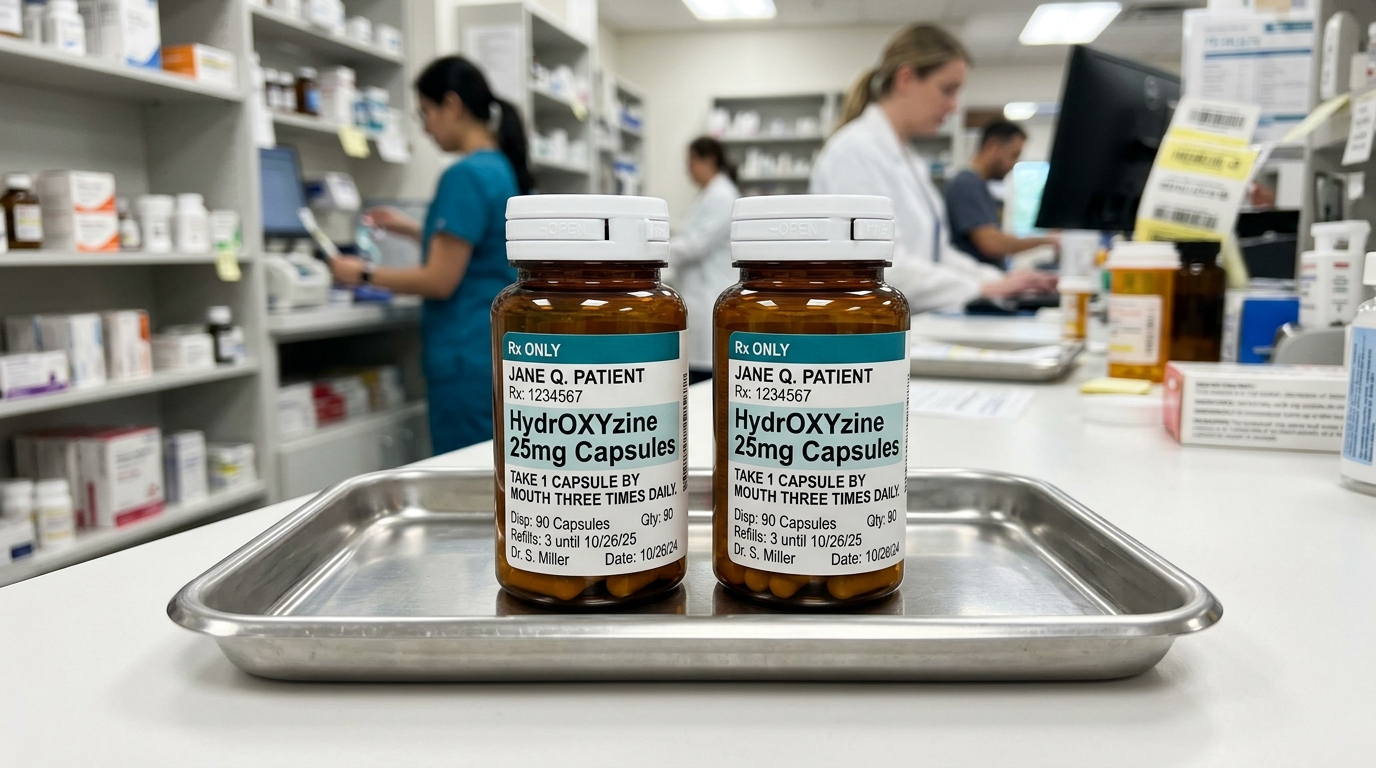
When a pharmacist or nurse is working at the end of a grueling 12-hour shift, processing dozens of prescriptions per hour amidst ringing telephones and patient questions, the brain relies heavily on automated heuristic shortcuts. If a technician glances at a prescription slip scribbled with "hydr... 25mg", their subconscious mind may instantly register the familiar anti-allergy medication hydroxyzine, completely overlooking that the physician actually wrote hydralazine (a potent vasodilator for severe hypertension).
This mental shortcut is termed "inattentive substitution". The clinician sees what they expect to see. The risk multiplies exponentially when drug strengths overlap: both hydroxyzine and hydralazine are manufactured in 25mg and 50mg tablets, eliminating the natural dosage warning sign that might otherwise alert a dispensing professional.
3. The Infamous LASA Hall of Fame: Real-World Dangerous Drug Pairs
Medical literature documents hundreds of hazardous LASA pairs, but several combinations have caused such widespread clinical morbidity that they are studied as canonical case studies in patient safety:
1. Hydralazine vs. Hydroxyzine: Hydralazine is a direct-acting arterial vasodilator prescribed to lower dangerous blood pressure crises. Hydroxyzine is a first-generation antihistamine prescribed for anxiety and pruritus. Confusing the two can cause severe hypotension, syncope, or unmanaged hypertensive strokes.
2. Celebrex vs. Celexa vs. Cerebyx: Perhaps the most notorious brand-name triad in history. Celebrex (celecoxib) is an NSAID for arthritis. Celexa (citalopram) is an SSRI antidepressant. Cerebyx (fosphenytoin) is an intravenous anticonvulsant for life-threatening epileptic seizures. Patients experiencing depression were mistakenly given arthritis pain relievers, while surgical patients received psychiatric medications, prompting the FDA to intervene.
3. Vinblastine vs. Vincristine: Two vinca alkaloid chemotherapy agents with names differing by only a few vowels. While both treat malignancies, their dosing and toxicity profiles diverge drastically. Accidental dose confusion has resulted in fatal neurotoxicity.
4. Prednisone vs. Prednisolone: While both are synthetic corticosteroids, prednisolone is an active metabolite frequently used in pediatric dosing due to liquid palatability, whereas prednisone requires hepatic activation. Conversion errors between mg formulations can lead to severe underdosing or steroid toxicity in fragile children.
The Celexa vs. Celebrex Disaster
The sound-alike similarity between Celexa (an antidepressant) and Celebrex (an arthritis pain reliever) resulted in thousands of documented dispensing errors, prompting global regulatory interventions and package redesigns.
4. Tall Man Lettering: How Mixed-Case Typography Saves Human Lives
To counteract perceptual priming and disrupt subconscious reading patterns, patient safety engineers developed an ingenious typographic innovation known as "Tall Man Lettering".
Tall Man Lettering uses capitalization within a word to highlight the unique, distinguishing syllables of look-alike drug names while leaving the identical, shared syllables in lowercase. By introducing visual contrast into the middle or end of a medication string, the eye is forced to slow down, break automated reading flow, and consciously evaluate the distinct identity of the drug.
For example, instead of writing "hydroxyzine" and "hydralazine", hospitals, pharmacy databases, and prescription software display them as "hydrOXYzine" and "hydrALAZINE". Instead of "prednisone" and "prednisolone", systems render "predniSONE" and "prednisoLONE". Clinical studies have shown that displaying Tall Man Lettering in pharmacy verification queues reduces visual selection errors by up to 64%, providing a simple yet profound layer of protection across the healthcare continuum.
5. The Peril of Uniform Packaging: Why Medicine Bottles Look Identical
While phonetic drug names represent one half of the LASA crisis, physical "look-alike" packaging represents the other equally dangerous half. In an effort to streamline brand identity and reduce corporate printing costs, many generic pharmaceutical manufacturers adopt uniform trade dress across their entire product lines.
A generic manufacturer might package thirty different injectable vials or oral tablet bottles in identical white plastic containers with matching turquoise labels, identical black fonts, and identical cap colors. The only element distinguishing a low-dose water pill from a lethal dose of concentrated potassium chloride or heparin anticoagulant is a tiny line of 8-point text.
When healthcare workers must locate medications in dimly lit hospital medication rooms or busy retail pharmacy shelves organized alphabetically, two entirely different drugs sitting adjacent to each other on the shelf can be accidentally grabbed in a split second. Patient advocacy groups continue to pressure regulatory bodies to mandate distinct color-coding, contrasting bottle caps, and tactile embossed shapes on high-alert medications.
6. Technological Safeguards: Barcode Scanning and EHR Clinical Decision Support
Modern healthcare institutions have deployed sophisticated technological defenses to neutralize human cognitive vulnerability. The gold standard among these is Barcode Medication Administration (BCMA). Under BCMA protocols, a nurse must scan the barcode on the patient's wristband, followed by scanning the barcode on the specific medication package before administering any dose. If the scanned pill does not match the physician's active electronic order, the system emits an audible warning and locks the electronic medication cart.
Similarly, advanced Electronic Health Record (EHR) systems utilize Clinical Decision Support (CDS) algorithms that trigger pop-up warnings whenever a prescriber types a known LASA drug name. If a physician types "Celeb...", the system displays a side-by-side alert contrasting Celebrex with Celexa and requires the clinician to explicitly select the primary diagnosis (e.g., osteoarthritis vs. major depressive disorder) before confirming the order.
However, technology is not foolproof. In outpatient community clinics and retail pharmacies that still rely on manual transcription or paper scripts, technical safeguards are often absent, leaving the patient as the vital final line of defense.
7. Master Reference Table: High-Risk LASA Pairs and Tall Man Designations
The following table illustrates the most critical look-alike, sound-alike drug pairs identified by global health authorities, complete with official Tall Man lettering and clinical purposes:
| Official Tall Man Spelling | Pharmacological Class & Purpose | Confused With (Tall Man) | Danger of Accidental Mix-Up |
|---|---|---|---|
| hydrOXYzine | Antihistamine / Anxiolytic for hives & anxiety | hydrALAZINE | Severe unexpected hypotension vs. untreated allergic reaction |
| predniSONE | Oral corticosteroid for systemic inflammation | prednisoLONE | Dosing mismatch in pediatrics, active vs. prodrug bioavailability |
| buPROPrion | Antidepressant & smoking cessation aid | busPIRone | Seizure risk at high doses vs. untreated generalized anxiety |
| clomiPHENE | Ovulatory stimulant for female infertility | clomiPRAMINE | Tricyclic antidepressant toxicity vs. failed reproductive cycle |
| cycloSERINE | Second-line antitubercular antibiotic | cycloSPORINE | Organ transplant rejection vs. uncontrolled drug-resistant tuberculosis |
| glipiZIDE | Sulfonylurea for type 2 diabetes | glyBURIDE | Severe prolonged hypoglycemia in elderly renal impairment |
| metFORMIN | Biguanide for type 2 diabetes | metroNIDAZOLE | Lactic acidosis vs. severe disulfiram alcohol toxicity |
| T3 (liothyronine) | Active triiodothyronine thyroid hormone | T4 (levothyroxine) | 4-fold potency difference; acute cardiac thyrotoxicosis |
8. The 5-Step Patient Defense Protocol: How to Never Take the Wrong Pill
Patients and family caregivers must never assume that the dispensing chain is infallible. By adopting a proactive 5-step personal safety protocol, you can eliminate the risk of receiving the wrong medication:
Step 1: Always ask for the diagnosis link. Whenever a physician prescribes a medication, ask: "Doctor, what is the exact name of this medicine, and what specific condition is it treating?" Write both down. If your prescription says hydralazine, ensure your note specifies "for blood pressure".
Step 2: Inspect the bottle at the pharmacy counter before leaving. Open the bag and read the printed label. If your doctor prescribed Celebrex for your knee pain, but the bottle says citalopram or Celexa, do not leave the counter. Ask the pharmacist: "My doctor prescribed an arthritis pain pill, but this label mentions depression—can we double-check the order?"
Step 3: Question visual changes. If you are refilling a chronic medication and the tablet's color, shape, or imprint has changed, pause. While generic manufacturers often change, never swallow a different-looking pill without asking the pharmacist: "Did the generic manufacturer change, or was this dispensed by mistake?"
Step 4: Use dual-name verification. Learn both the brand name and the active generic salt of every drug you take. Knowing that your Lipitor is atorvastatin or your Zoloft is sertraline provides an immediate secondary safety check if an unfamiliar name appears.
Step 5: Utilize digital verification tools. Scanning your physical prescription slip with intelligent platforms like Theprescription allows you to instantly verify active ingredients, cross-reference approved indications, and confirm that what you hold in your hand matches what your physician intended.
Key Clinical Takeaways for Patients
- Look-Alike, Sound-Alike (LASA) medication pairs account for up to 25% of all reported medication dispensing and administration errors globally.
- Phonetic and orthographic similarities between drug pairs (e.g., hydralazine vs. hydroxyzine, Celexa vs. Celebrex) create dangerous cognitive substitution biases under high clinical workload.
- Tall Man Lettering (e.g., hydrOXYzine vs. hydrALAZINE) is an internationally recognized safety standard that capitalizes unique letter strings to visually alert clinicians.
- Packaging uniformity by pharmaceutical manufacturers exacerbates dispensing risk when different drug strengths or molecules share identical color palettes.
- Patients can protect themselves by always asking for both the brand and generic names and verifying the explicit medical indication before accepting any dispensed medication.
Medical Disclaimer: Medical Disclaimer: This article is published solely for educational, health literacy, and informational purposes. Theprescription is not a certified medical device and does not dispense medical advice. Patients must never alter, stop, or initiate prescription medications without direct clinical consultation with a licensed physician and dispensing pharmacist. Originally published on Theprescription.