How to Read Routine Blood Test Prescriptions: Understanding CBC, Lipid Panel, and Kidney Markers
An In-Depth Patient Guide to Deciphering Laboratory Pathology Requisitions, Reference Ranges, Serum Creatinine, eGFR, ALT/AST, and Complete Blood Counts
An In-Depth Patient Guide to Deciphering Laboratory Pathology Requisitions, Reference Ranges, Serum Creatinine, eGFR, ALT/AST, and Complete Blood Counts
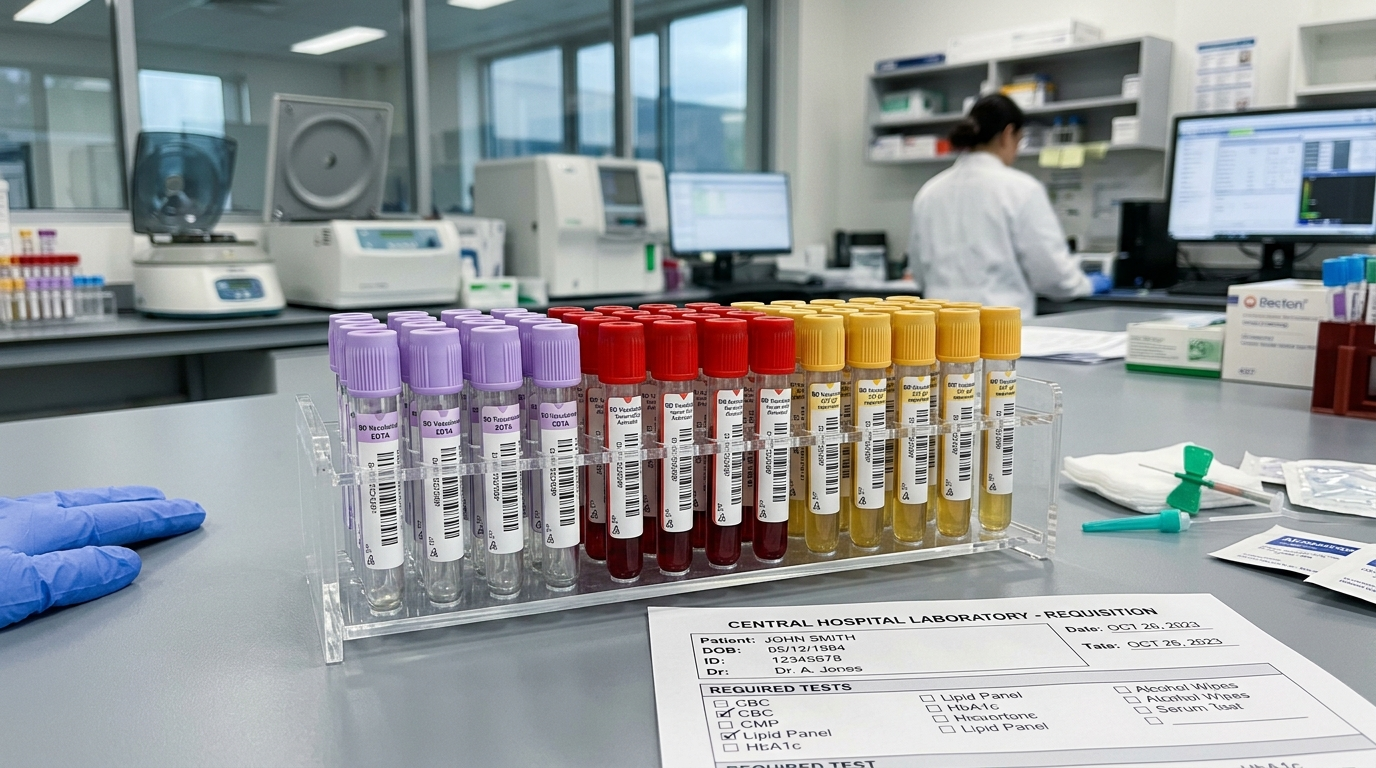
1. The Cryptic Lab Requisition Slip: Why Doctors Order Blood Work
During an annual physical or an evaluation for persistent fatigue, abdominal discomfort, or dizziness, your physician will often check several boxes on a paper laboratory slip or hand you a digital pathology order: "CBC with differential, CMP, Lipid Panel, TSH, and HbA1c." A few days later, you receive a multi-page PDF or paper document containing dozens of numerical values, units like mg/dL or uIU/mL, and highlighted flags marked "High", "Low", or with bold red asterisks.
For most patients, looking at these pathology results induces immediate anxiety. If an automated lab system flags your alkaline phosphatase as 124 when the upper limit is 120, does that mean your liver is failing? If your mean corpuscular volume (MCV) is slightly depressed, is it a medical emergency?
Understanding clinical laboratory diagnostics transforms fear into empowered health literacy. Blood tests are not pass/fail exams; they are biological dynamic snapshots reflecting cellular turnover, metabolic flux, and organ clearance. In this comprehensive guide, we unpack the major routine blood test panels, explain the biochemical significance of key biomarkers, and provide the clinical context you need to interpret your numbers accurately.
2. Complete Blood Count (CBC): Hemoglobin, WBCs, and Platelets
The Complete Blood Count (CBC) is the foundational test of clinical hematology. It evaluates the three major cellular lineages suspended in your blood plasma: red blood cells, white blood cells, and platelets.
1. Red Blood Cell (RBC) Metrics: Hemoglobin (Hb) is the iron-rich protein that transports oxygen from your lungs to systemic tissues. Hematocrit (Hct) represents the percentage of total blood volume composed of red blood cells. Low hemoglobin or hematocrit indicates anemia (which causes fatigue, shortness of breath, and pale skin), commonly triggered by iron deficiency, chronic kidney disease, or occult gastrointestinal blood loss. Red blood cell indices—such as Mean Corpuscular Volume (MCV)—measure the average physical size of your red cells, helping doctors classify anemia into microcytic (small cells, typical of iron deficiency or thalassemia) versus macrocytic (large cells, characteristic of Vitamin B12 or folate deficiency).
2. White Blood Cells (WBC): White blood cells are the frontline soldiers of your immune system. Elevated WBC counts (leukocytosis) frequently signal an active bacterial infection, acute systemic inflammation, tissue trauma, or severe emotional/physical stress. A depressed WBC count (leukopenia) can arise from viral infections, autoimmune destruction, or bone marrow suppression. The WBC "differential" breaks down the cell types: neutrophils rise during acute bacterial infections, lymphocytes surge during viral illnesses, and eosinophils elevate during allergic reactions or parasitic infestations.
3. Platelets (Thrombocytes): Platelets are tiny cell fragments responsible for initiating blood clots to seal vascular injuries. Low platelet counts (thrombocytopenia) elevate the risk of spontaneous bruising, petechiae, and prolonged bleeding; elevated platelets (thrombocytosis) can occur in response to chronic systemic inflammation or primary myeloproliferative disorders.
Understanding the CBC Differential
Neutrophils fight acute bacterial infections; lymphocytes target viral invaders; eosinophils combat allergic flares and parasites. A "differential" reveals exactly which branch of your immune army is actively fighting.
3. Kidney Function Tests (KFT / BMP): Creatinine, BUN, and eGFR
Your kidneys filter approximately 180 liters of fluid every 24 hours, removing metabolic toxins while meticulously balancing electrolyte concentrations and blood pressure. Kidney Function Tests (often ordered as part of a Basic Metabolic Panel [BMP] or Comprehensive Metabolic Panel [CMP]) track renal clearance through three cardinal markers:
1. Serum Creatinine: Creatinine is a chemical waste byproduct of normal muscle metabolism produced at a constant daily rate. Because healthy kidneys filter creatinine out of the blood almost completely without reabsorbing it, serum creatinine is the primary biomarker of glomerular filtration. Normal levels range from roughly 0.6 to 1.2 mg/dL. Elevated serum creatinine indicates impaired renal filtration, which can be acute (e.g., severe dehydration or medication toxicity) or chronic (e.g., diabetic nephropathy or hypertensive glomerulosclerosis).
2. Estimated Glomerular Filtration Rate (eGFR): Because muscle mass affects creatinine levels, modern laboratories automatically calculate eGFR using mathematical algorithms incorporating age, sex, and serum creatinine. An eGFR above 90 mL/min/1.73m² indicates normal kidney function; values persistently below 60 mL/min/1.73m² for over three months define Chronic Kidney Disease (CKD), requiring medical management and dose adjustments for medications cleared by the kidneys.
3. Blood Urea Nitrogen (BUN): BUN measures the amount of nitrogen in your blood derived from urea, a waste product of protein breakdown in the liver. An elevated BUN-to-creatinine ratio (greater than 20:1) is a classic clinical indicator of prerenal azotemia, commonly caused by severe dehydration or acute upper gastrointestinal bleeding.
4. Liver Function Tests (LFT): ALT, AST, Alkaline Phosphatase, and Bilirubin
The liver is the body's master metabolic engine, responsible for synthesizing clotting proteins, manufacturing albumin, metabolizing prescription medications, and secreting digestive bile. What doctors call "Liver Function Tests" actually measure cellular injury and biliary excretion:
1. Alanine Aminotransferase (ALT) and Aspartate Aminotransferase (AST): These are intracellular enzymes found inside hepatocytes (liver cells). When liver cells are damaged, inflamed, or stressed, their cell membranes become permeable, leaking ALT and AST into the bloodstream.
2. Alkaline Phosphatase (ALP): ALP is an enzyme concentrated in the microvilli of the bile ducts and in bone-forming osteoblasts.
3. Total and Direct Bilirubin: Bilirubin is the yellow-orange pigment produced by the normal breakdown of aging red blood cells.
5. The Comprehensive Lipid Panel: Total Cholesterol, LDL, HDL, and Triglycerides
Cardiovascular disease remains the leading cause of mortality worldwide. A fasting lipid panel assesses circulating lipid fractions to calculate atherosclerotic cardiovascular disease (ASCVD) risk:
1. Low-Density Lipoprotein Cholesterol (LDL-C): Often labeled "bad cholesterol," LDL particles transport cholesterol from the liver to peripheral arterial walls.
2. High-Density Lipoprotein Cholesterol (HDL-C): Known as "good cholesterol," HDL acts as a reverse cholesterol transport system, gathering excess cholesterol from arterial tissues and transporting it back to the liver for excretion in bile.
3. Triglycerides: Triglycerides represent the primary storage form of excess caloric energy in the body.
6. Glycemic Control Markers: Fasting Blood Glucose vs. Glycated Hemoglobin (HbA1c)
Diagnosing and monitoring diabetes and insulin resistance relies on two distinct but complementary biomarkers:
Fasting Blood Glucose measures the concentration of glucose in plasma after at least an 8-hour overnight fast. A normal fasting level is under 100 mg/dL; values between 100 and 125 mg/dL reflect prediabetes (impaired fasting glucose); and levels of 126 mg/dL or higher on two separate tests confirm diabetes mellitus.
Hemoglobin A1c (HbA1c), or glycated hemoglobin, provides a powerful long-term perspective. As red blood cells circulate, glucose in the bloodstream permanently attaches to hemoglobin molecules in a process called non-enzymatic glycation.
Why HbA1c Cannot Be Fooled
A fasting glucose test only tells your doctor what your sugar was this morning. HbA1c captures your 3-month rolling average. Fasting for one day before the lab will not lower an elevated HbA1c.
7. The Master Laboratory Biomarker Reference and Interpretation Guide
The following reference table summarizes standard adult reference ranges, clinical indications, and common causes for out-of-range values across routine blood panels:
| Biomarker / Panel | Standard Adult Reference | Clinical Organ System | Common Causes of Out-of-Range Values |
|---|---|---|---|
| Hemoglobin (Hb) | Men: 13.5-17.5 g/dL; Women: 12.0-15.5 g/dL | Hematology / Oxygenation | Low: Iron deficiency, blood loss; High: Dehydration, smoking, polycythemia |
| White Blood Cells (WBC) | 4,500 - 11,000 /mcL | Immune / Infection Defense | High: Bacterial infection, tissue injury, stress; Low: Viral infections, marrow issue |
| Platelets | 150,000 - 450,000 /mcL | Coagulation / Hemostasis | Low: Immune destruction, liver cirrhosis, drugs; High: Systemic inflammation |
| Serum Creatinine | 0.6 - 1.2 mg/dL | Renal Filtration (Kidneys) | Elevated: Kidney disease, acute dehydration, heavy meat diet, NSAID toxicity |
| eGFR | > 90 mL/min/1.73m² | Glomerular Filtration Rate | < 60 for >3 months indicates chronic kidney disease (CKD) |
| ALT (Alanine Transferase) | 7 - 56 U/L | Hepatocellular Integrity | Elevated: Fatty liver, viral hepatitis, alcohol excess, medication hepatotoxicity |
| AST (Aspartate Transferase) | 10 - 40 U/L | Liver, Heart, Skeletal Muscle | Elevated: Liver disease, strenuous exercise, myocardial infarction; AST>ALT in alcohol |
| LDL Cholesterol | < 100 mg/dL (optimal) | Cardiovascular Atherosclerosis | Elevated: Saturated fat intake, genetics; increases myocardial infarction risk |
| Triglycerides | < 150 mg/dL | Metabolic / Lipid Storage | Elevated: Excess sugar/carbs, obesity, alcohol; >500 risks acute pancreatitis |
| HbA1c (Glycated Hb) | < 5.7% (normal) | 3-Month Glycemic Control | 5.7-6.4%: Prediabetes; >= 6.5%: Diabetes mellitus requiring clinical therapy |
8. How to Prepare for Blood Draws and Discuss Findings with Your Doctor
Achieving accurate laboratory results requires proper patient preparation. Follow these clinical recommendations before your scheduled phlebotomy:
First, adhere strictly to fasting instructions. If your requisition requires a 10-to-12-hour fast (mandatory for lipid panels and fasting blood glucose), drink plenty of plain water, but avoid all food, coffee, tea, milk, or juices.
Second, clarify whether to take your morning medications. Most blood pressure and thyroid medications can be taken with a small sip of water, but blood sugar medications (like insulin or sulfonylureas) should typically be delayed until after the blood draw to prevent dangerous fasting hypoglycemia.
Third, understand statistical reference ranges. Medical reference intervals are calculated to encompass 95% of a healthy reference population.
Finally, utilize digital literacy tools like Theprescription. You can photograph your laboratory requisition or lab reports to instantly translate complex medical acronyms, understand their physiological meanings, and prepare focused, educated questions for your next clinical consultation.
Key Clinical Takeaways for Patients
- Laboratory test requisitions use standardized clinical panels (CBC, LFT, KFT/BMP, Lipid Panel) to systematically evaluate organ systems.
- A Complete Blood Count (CBC) examines cellular hematology: hemoglobin and hematocrit (oxygenation), white blood cells (infection/inflammation), and platelets (clotting).
- Kidney panels track filtration efficiency via serum creatinine, Blood Urea Nitrogen (BUN), and estimated Glomerular Filtration Rate (eGFR).
- Liver panels measure hepatic integrity via hepatocellular enzymes (ALT, AST) and biliary excretion markers (ALP, total bilirubin).
- Laboratory "reference ranges" represent statistical 95% confidence intervals of healthy populations; minor fluctuations outside the boundary are common and require contextual physician interpretation.
Medical Disclaimer: Medical Disclaimer: This article is published solely for educational, health literacy, and informational purposes. Theprescription is not a certified medical device and does not dispense medical advice. Patients must never alter, stop, or initiate prescription medications without direct clinical consultation with a licensed physician and dispensing pharmacist. Originally published on Theprescription.