Generic vs. Brand-Name Medications: The Pharmacology, Bioequivalence, and Cost Truths
An Exhaustive Clinical Guide to Active Pharmaceutical Ingredients, Bioavailability Confidence Intervals, Inactive Excipients, and Why Generic Medicines Save Patients Billions Without Sacrificing Therapeutic Efficacy
An Exhaustive Clinical Guide to Active Pharmaceutical Ingredients, Bioavailability Confidence Intervals, Inactive Excipients, and Why Generic Medicines Save Patients Billions Without Sacrificing Therapeutic Efficacy
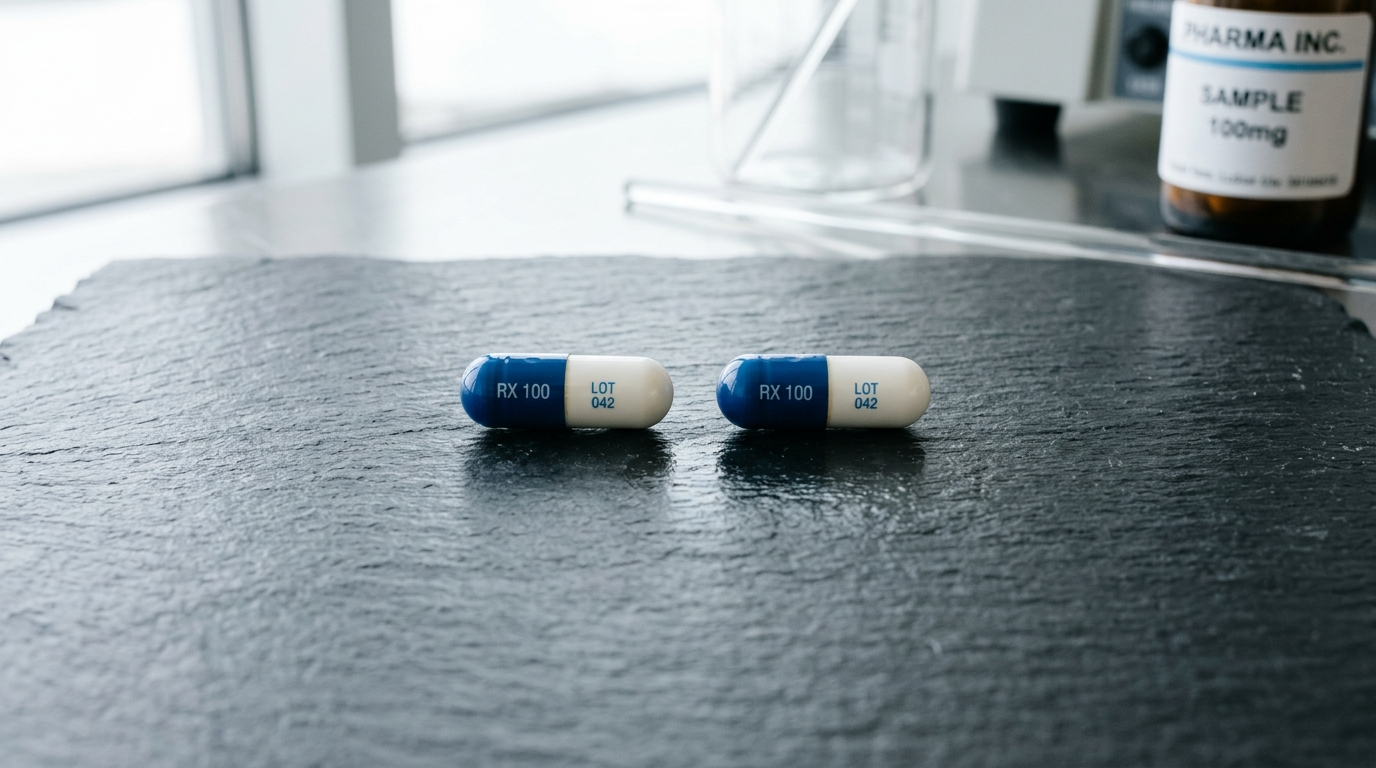
1. The Prescription Counter Dilemma: High Costs vs. Generic Hesitancy
Standing at the community pharmacy checkout counter, millions of patients encounter a recurring financial dilemma: "Your brand-name cholesterol medication is $280 for a 30-day supply, but the generic bioequivalent is $12. Would you like us to dispense the generic?" For many individuals, this massive 95% price discrepancy triggers immediate psychological skepticism. In consumer electronics or designer fashion, paying one-twentieth of the price usually signals a flimsy imitation or an inferior counterfeit. When applied to life-saving cardiovascular, antimicrobial, or psychiatric therapies, hesitation is natural.
Common patient questions reflect deep-seated concerns: Is a generic pill weaker? Does it absorb more slowly?
The empirical reality, established over forty years of clinical trials and international regulatory oversight, is clear: generic medications approved by stringent health authorities (including the United States FDA, the European Medicines Agency, Health Canada, and India's CDSCO) are therapeutically identical to their originator brand-name counterparts. In this definitive clinical exploration, we examine the molecular mechanics of drug formulation, the mathematical equations of bioequivalence, the genuine reasons behind dramatic price reductions, and the rare clinical scenarios where brand consistency truly matters.
2. The Anatomy of a Pill: Active Pharmaceutical Ingredients (APIs) vs. Excipients
To understand why generic drugs perform identically inside the human bloodstream, one must first dissect the two distinct chemical halves of any modern solid dosage form: the Active Pharmaceutical Ingredient (API) and the inactive excipients.
The Active Pharmaceutical Ingredient (API) is the specific chemical compound responsible for producing the intended therapeutic response. For instance, in the widely prescribed brand-name cholesterol drug Lipitor, the API is atorvastatin calcium.
In contrast, inactive excipients constitute the structural matrix of the pill. Because a 5-milligram dose of an active cardiovascular drug is smaller than a pinhead, it cannot be physically handled or compressed by automated factory presses on its own.
Core Pharmacological Principle
The therapeutic healing power of a medication resides entirely within its Active Pharmaceutical Ingredient (API). Inactive excipients have zero medicinal action; their sole function is to transport, stabilize, and physically package the active molecule.
3. The Rigorous Science of Bioequivalence: AUC, Cmax, and the 80-125% Rule
The primary scientific benchmark for generic drug authorization is known as bioequivalence. A prospective generic manufacturer cannot simply state that their pill contains the same chemical molecule; they must prove in rigorous clinical crossover trials on human volunteers that their formulation delivers the active drug into the bloodstream at the identical rate and extent as the originator brand.
In a standard bioequivalence trial, healthy human volunteers receive single doses of both the brand-name drug and the test generic on separate study days, separated by an adequate drug-washout period. Frequent serial blood samples are drawn over hours and days to plot the Plasma Drug Concentration versus Time Curve.
A widespread patient misconception suggests that generic drugs are permitted to vary in potency by plus-or-minus 20% compared to the brand name (believing that an 80% to 120% range represents a sloppy 40% margin of error). This is a profound mathematical misunderstanding.
| Pharmacokinetic Metric | Scientific Definition | Brand vs. Generic Regulatory Requirement | Real-World Observed Variance |
|---|---|---|---|
| Active Molecule (API) | Core therapeutic chemical entity | Must be 100% chemically identical salt and purity | 0% chemical divergence allowed |
| AUC (Area Under Curve) | Total cumulative systemic drug bioavailability | 90% CI must fall between 80.00% and 125.00% | Actual average variance is ~3.2% |
| Cmax (Peak Concentration) | Maximum plasma level reached in blood | 90% CI must fall between 80.00% and 125.00% | Actual average variance is ~3.8% |
| Tmax (Time to Peak) | Elapsed minutes or hours to reach maximum blood level | Must demonstrate overlapping absorption kinetics | Clinically indistinguishable timeline |
| Manufacturing GMP Standards | Good Manufacturing Practices audit standards | Identical FDA/EMA facility inspection criteria | Zero concession for generic facilities |
4. The Economic Anatomy of Drug Pricing: Why Generics Cost 80% to 85% Less
If generic medications are subject to the same clinical potency requirements and manufactured in audited facilities adhering to strict Current Good Manufacturing Practices (cGMP), why are they sold at discounts of 80% to 85%, or occasionally 95% below the brand price? The answer lies not in production shortcuts, but in the financial mechanics of pharmaceutical patent life-cycles.
When an innovative pharmaceutical corporation discovers a new drug molecule, it spends an estimated $1.5 billion to $2.8 billion over 10 to 15 years. This massive capital covers exploratory biochemical synthesis, animal toxicology, Phase I safety trials, Phase II dose-ranging studies, and massive multi-center Phase III human clinical trials involving tens of thousands of patients.
Once that patent expires, however, the original investment has been amortized. Generic manufacturers do not need to repeat decades of basic pre-clinical discovery or multi-thousand-patient efficacy trials; they only need to run a focused bioequivalence study verifying systemic absorption.
“The dramatic cost reduction of generic pharmaceuticals is not a compromise on clinical quality; it is the natural triumph of open-market competition once patent monopolies expire.”
— Clinical Pharmacoeconomics Consensus, WHO Essential Medicines Programme
5. When Excipients Actually Matter: Allergies, Dyes, and Gluten Concerns
While the active pharmaceutical ingredient in a generic pill is strictly identical to the brand, the inactive excipients—the binders, fillers, preservatives, and color coatings—can and do vary between different pharmaceutical manufacturers. For 99% of the population, these differences are completely benign, as excipients are selected from non-toxic, biologically inert food-grade compounds.
However, for a small subset of sensitive patients, excipient variations warrant attention. For example, lactose monohydrate is a common, inexpensive filler used in tablet compression.
Another critical category is gluten. Patients diagnosed with celiac disease must ensure that their oral tablets do not use wheat starch as a binder, favoring instead potato starch, corn starch, or synthetic microcrystalline cellulose.
6. The Critical Clinical Exceptions: Narrow Therapeutic Index (NTI) Medications
Is there ever a clinical scenario where switching between brand-name and generic drugs, or switching between two different generic manufacturers, requires extra clinical caution? Yes.
An NTI medication is a drug where minute differences in systemic dose or blood concentration can lead to serious therapeutic failures or life-threatening toxicities. The margin between a dose that cures and a dose that harms is exceptionally narrow.
1. Levothyroxine (Thyroid Hormone Replacement): Used to treat hypothyroidism.
2. Warfarin (Anticoagulant): Used to prevent blood clots.
3. Lithium (Mood Stabilizer): Used in bipolar disorder.
4. Tacrolimus and Cyclosporine (Immunosuppressants): Used in organ transplant recipients.
5. Carbamazepine and Phenytoin (Antiepileptics): Minor shifts in serum concentration can provoke breakthrough seizure activity.
Clinical recommendation: Patients on NTI drugs can safely take generic formulations, but once stable on a specific manufacturer's product, they should ideally remain on that exact manufacturer's generic formulation for routine refills, or have their serum blood levels re-checked by their physician after switching brands.
Clinical Guidance on NTI Medications
If you take levothyroxine, warfarin, lithium, or anti-seizure drugs, ask your pharmacist to keep you on the identical generic manufacturer for every refill. If the pharmacy changes suppliers, request a routine blood level check 4 to 6 weeks after the switch.
7. Authorized Generics vs. Standard Generics: What Is the Difference?
An intriguing corner of the pharmaceutical market that few consumers understand is the category known as authorized generics. An authorized generic is not just bioequivalent to the brand-name drug—it is the exact brand-name drug, manufactured in the exact same facility, on the exact same assembly line, using the exact same active molecules and identical excipients, but packaged in a plain bottle under a generic label.
Why would an originator pharmaceutical brand produce an authorized generic? When a brand-name drug approaches patent expiration, independent generic competitors prepare to launch.
For patients who suffer from documented excipient allergies or who experience anxiety over slight visual alterations in pill shape and color, authorized generics offer the best of both worlds: identical brand formulation, identical excipient profile, and rock-bottom generic pricing. You can always ask your pharmacist if an authorized generic exists for your chronic medications.
8. Actionable Patient Guide: How to Safely Switch and Verify Your Generic Salts
Navigating the pharmacy counter with confidence requires understanding your medication by its generic chemical salt rather than its commercial marketing brand name. Here is a practical, five-step health literacy protocol for every patient and caregiver:
Step 1: Always learn your generic chemical name. When your doctor prescribes an unfamiliar medication, ask: "What is the active generic molecule of this drug?" Write down the generic name (e.g., amlodipine, metformin, sertraline) alongside the brand name.
Step 2: Inspect your pills when you pick up refills. In the generic drug industry, pharmacies frequently switch wholesale suppliers based on market pricing and availability.
Step 3: Calculate your annual savings. For chronic conditions like hypertension, hyperlipidemia, and type 2 diabetes, switching from expensive brand-name medications to proven generics often reduces out-of-pocket copays from $150+ per month to less than $10 per month, saving an average family over $1,600 every year and eliminating medication non-adherence caused by cost rationing.
Step 4: Use digital verification tools. If your doctor's handwritten prescription has a messy brand name scribbled on the pad, use modern clinical lookup tools and optical readers like Theprescription to identify the exact generic salt, discover approved alternative formulations, and arrive at the pharmacy counter fully informed.
By treating generic medications with the respect their rigorous pharmacology deserves, patients can achieve optimal health outcomes while protecting their financial well-being.
Key Clinical Takeaways for Patients
- Generic medications contain the exact same Active Pharmaceutical Ingredient (API) in the identical chemical purity, strength, dosage form, and route of administration as brand-name drugs.
- Regulatory bodies mandate bioequivalence testing showing a 90% confidence interval of 80% to 125% for pharmacokinetic AUC and Cmax, ensuring identical therapeutic efficacy.
- The 80-85% cost savings of generics stem entirely from bypassed pre-clinical research trials and marketing expenses, never from inferior manufacturing standards.
- Inactive excipients (fillers, binders, colorants) can vary between generic manufacturers, which rarely matters except in rare documented binder allergies or gluten/lactose sensitivities.
- Narrow Therapeutic Index (NTI) drugs (such as levothyroxine, warfarin, lithium, and tacrolimus) warrant careful physician supervision and consistent manufacturer branding during refills.
Medical Disclaimer: Medical Disclaimer: This article is published solely for educational, health literacy, and informational purposes. Theprescription is not a certified medical device and does not dispense medical advice. Patients must never alter, stop, or initiate prescription medications without direct clinical consultation with a licensed physician and dispensing pharmacist. Originally published on Theprescription.