Empty Stomach vs. With Meals: How Food Chemistry Alters Drug Absorption and Gastric Safety
The Physiology of Gastric pH, Splanchnic Blood Flow, Bile Salts, and Mucosal Protection: The Definitive Guide to Taking Medicines with or Without Food
The Physiology of Gastric pH, Splanchnic Blood Flow, Bile Salts, and Mucosal Protection: The Definitive Guide to Taking Medicines with or Without Food
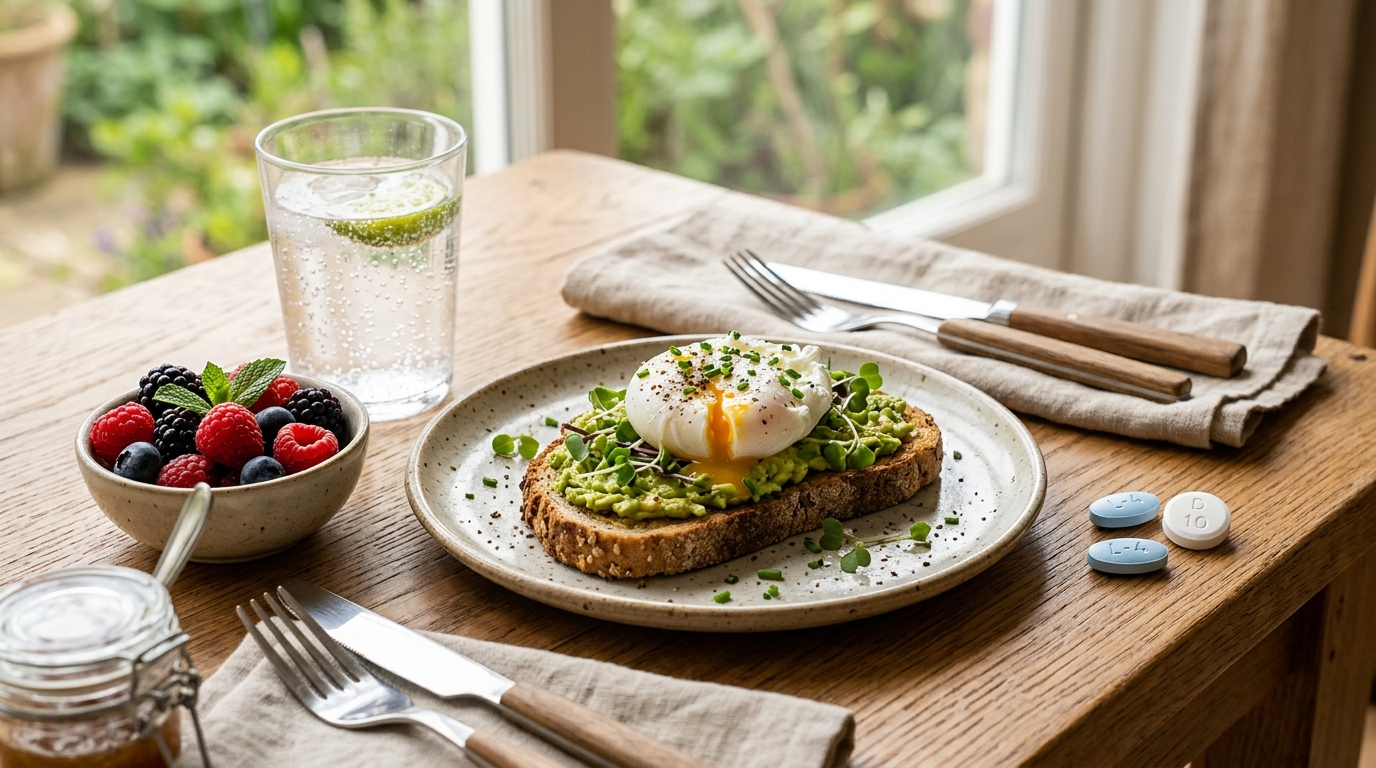
1. The Most Overlooked Auxiliary Label: Why Meal Instructions Matter
When picking up a prescription from the pharmacy, you will almost always notice bright yellow or blue auxiliary warning stickers plastered onto the side of the plastic container: "Take with food or milk," or "Take on an empty stomach with plenty of water." For many busy patients, these stickers are dismissed as mere suggestions or minor conveniences.
In reality, whether your stomach is empty or filled with a three-course dinner is one of the most powerful physiological determinants of whether your medication will cure you, fail completely, or burn a hole through your stomach lining. The presence of food alters gastric acidity, mechanical churning, transit times, and liver blood flow in profound ways.
In this comprehensive clinical guide, we demystify the scientific mechanics behind food-drug directives, provide precise definitions for fasting protocols, highlight the medications that demand strict compliance, and show you how to structure your daily eating and pill-taking routine with total confidence.
2. The Pharmacological Definition: What "Empty Stomach" Actually Means
One of the most frequent misconceptions in health literacy revolves around what an "empty stomach" actually signifies in clinical pharmacology. Many patients believe that taking a pill with a cup of coffee with creamer, a small biscuit, or a glass of orange juice counts as an empty stomach because it wasn't a "real meal".
In clinical pharmacology, an empty stomach has a precise, rigorous definition: you must take the medication at least ONE HOUR BEFORE eating, or at least TWO HOURS AFTER eating any food or caloric beverage.
Why this specific two-hour window? Following a meal, the human stomach takes approximately 90 to 120 minutes to mechanically grind food into a liquid suspension called chyme and propel it through the pyloric sphincter into the duodenum. Taking a pill 45 minutes after eating means that tablet will sit directly on top of a full stomach of digesting food, entirely invalidating the intended fasting pharmacokinetic curve.
The 1-Hour / 2-Hour Fasting Rule
Empty stomach strictly means: 1 hour BEFORE eating food, or 2 hours AFTER completing a meal. Plain water is the only beverage permitted during fasting pill administration.
3. Gastrointestinal Physiology: How Food Rewires Drug Dissolution
Food alters drug kinetics through several simultaneous physiological pathways:
First, alteration of gastric pH: In a fasting state, basal stomach acid maintains a highly acidic pH between 1.0 and 2.0. Ingesting food initially buffers and raises the gastric pH to 3.0 to 5.0, before stimulating secondary gastrin-mediated acid release. Weakly acidic or basic drugs dissolve differently depending on this shifting pH profile.
Second, delayed gastric emptying: A fasting stomach empties liquids within 10 to 20 minutes. A solid, fatty meal delays stomach emptying for 2 to 4 hours. Drugs sensitive to acid degradation (such as certain penicillins or proton pump inhibitors) that remain trapped in churning acid for hours can be destroyed before reaching the absorptive lining of the small intestine.
Third, stimulation of bile salts: Ingesting dietary lipids triggers cholecystokinin (CCK) release, causing the gallbladder to contract and flood the duodenum with bile acids. Bile salts act as biological surfactants, dramatically increasing the solubility and absorption of lipophilic (fat-loving) pharmaceutical molecules.
Fourth, increased splanchnic blood flow: Postprandial digestion diverts a large volume of blood directly to mesenteric vessels and the portal vein, which can alter hepatic first-pass drug clearance.
4. The Fasting Essentials: Drugs Rendered Useless by Food
Certain medications have molecular structures so sensitive to food interference that swallowing them with a meal renders them clinically inert:
1. Levothyroxine (Synthroid): Prescribed to treat hypothyroidism. Dietary fibers, calcium in dairy, soy proteins, and even morning espresso physically adsorb to levothyroxine molecules in the gut, slashing bioavailability by 40% to 60%. Patients who take levothyroxine with breakfast often struggle with chronic fatigue, weight gain, and abnormal TSH levels simply because the drug never entered their bloodstream. It must be taken with a full glass of water 30 to 60 minutes before breakfast.
2. Oral Bisphosphonates (Alendronate / Fosamax, Risedronate): Prescribed for osteoporosis. Bisphosphonates have notoriously poor baseline oral bioavailability—often less than 0.7%! Swallowing alendronate with food, coffee, or juice reduces absorption to essentially zero. Furthermore, these pills can cause severe erosive esophagitis; patients must take them first thing in the morning with 8 ounces of plain water and remain upright for at least 30 minutes.
3. Proton Pump Inhibitors (Omeprazole, Esomeprazole, Pantoprazole): PPIs work by inhibiting active H+/K+ ATPase proton pumps in stomach parietal cells. Because these pumps are newly synthesized and activated by the anticipation of a meal, the drug must be absorbed into circulation 30 to 60 minutes before breakfast to intercept active acid secretion.
4. Specific Antibiotics (Ampicillin, Rifampin): Readily degraded by digestive acids or bound by food proteins, demanding empty-stomach administration.
5. The Food-Dependent Heavyweights: Drugs That Require Food for Safety
At the opposite end of the clinical spectrum are medications that must NEVER be swallowed on an empty stomach, primarily due to mucosal damage risks or profound absorption requirements:
1. Non-Steroidal Anti-Inflammatory Drugs (NSAIDs): Ibuprofen (Advil, Motrin), naproxen (Aleve), and diclofenac (Voltaren). NSAIDs inhibit cyclooxygenase-1 (COX-1) enzymes, which are responsible for producing the protective prostaglandins that maintain the stomach's mucosal mucus barrier and stimulate bicarbonate secretion. Taking NSAIDs on an empty stomach strips the gastric lining of defense against harsh hydrochloric acid, causing acute chemical gastritis, bleeding erosions, and perforated peptic ulcers. Always take NSAIDs with a substantial meal or milk.
2. Oral Corticosteroids (Prednisone, Dexamethasone): Like NSAIDs, systemic steroids irritate gastric mucosa and increase ulcer risk; they should always accompany food.
3. Metformin: The frontline medication for type 2 diabetes frequently causes gastrointestinal nausea, abdominal cramps, and diarrhea. Taking metformin with the largest meal of the day dramatically cushions the gut and improves tolerability.
4. Potassium Chloride Supplements: Highly concentrated potassium salts can cause direct caustic ulceration of the gastrointestinal mucosa if they dissolve in contact with an empty stomach wall; always take with food and a full glass of water.
NSAID Ulcer Risk
Never swallow ibuprofen, naproxen, or diclofenac on an empty stomach. Always buffer these pills with a meal or snack to protect your gastric lining against chemical ulceration.
6. Fat-Soluble Therapeutics: When a Fatty Meal Is Medically Mandatory
A fascinating subset of pharmaceuticals includes highly lipophilic molecules that depend on dietary fats for proper absorption. For these drugs, taking them with a plain glass of water on an empty stomach results in poor therapeutic absorption, whereas consuming them with a meal containing healthy fats boosts blood levels by 200% to 400%!
A prime example is isotretinoin (Accutane), used for severe cystic acne. Isotretinoin is a retinoid with high lipid solubility; taking it without dietary fat cuts systemic absorption in half, leading to treatment failure and acne relapse. Patients are advised to take isotretinoin with a meal containing at least 20 grams of fat (such as eggs, peanut butter, avocado, or cheese).
Other fat-dependent medications include certain antifungal agents (such as oral itraconazole capsules and posaconazole) and antiretroviral therapies (such as rilpivirine). Your pharmacist can advise you whether your specific pill requires a fat-containing meal for optimal absorption.
7. The Master Empty Stomach vs. With Food Medication Guide
The following reference table summarizes the meal relationship requirements for major prescription and over-the-counter medication classes:
| Medication / Class | Required Administration Timing | Physiological Rationale | Consequence of Non-Compliance |
|---|---|---|---|
| Levothyroxine (Synthroid) | Empty stomach (60 min before breakfast) | Food, dairy, coffee, and fiber bind drug molecules | Hypothyroidism relapse, poor absorption |
| Alendronate (Fosamax) | Empty stomach (first waking, upright 30m) | Extremely low baseline bioavailability; food abolishes absorption | Zero drug absorption; erosive esophagitis |
| Proton Pump Inhibitors (omeprazole) | 30 to 60 minutes before first meal | Drug must peak as parietal proton pumps are activated | Blunted acid suppression efficacy |
| NSAIDs (ibuprofen, naproxen) | Immediately AFTER or WITH a full meal | Inhibits protective prostaglandins; direct mucosal irritation | Chemical gastritis, severe peptic ulcers |
| Prednisone / Dexamethasone | WITH breakfast or early morning meal | Gastric mucosal irritation; aligns with cortisol peak | Severe nausea, stomach ulcers, insomnia |
| Metformin (Glucophage) | WITH meals (breakfast and/or dinner) | Minimizes direct intestinal osmotic irritation | Severe nausea, abdominal cramps, diarrhea |
| Isotretinoin (Accutane) | WITH a meal containing dietary fats | Bile salts and lipids required to dissolve drug micelles | Up to 50% loss of drug efficacy, acne relapse |
| Potassium Chloride | WITH a full meal and full glass of water | Prevents concentrated hyperosmolar caustic erosion | Local mucosal ulceration and bleeding |
8. Practical Daily Scheduling: How to Coordinate Meals and Medications
Balancing multiple daily medications with varying food requirements does not have to complicate your life. Follow this simple daily timeline architecture:
Wake Up (7:00 AM): Take your empty-stomach medications (e.g., levothyroxine or alendronate) with a tall glass of plain water. Leave your pill bottle on your nightstand so you take it the moment your feet hit the floor.
Breakfast (8:00 AM): 60 minutes later, enjoy your breakfast. Take your with-food medications (e.g., morning NSAIDs, prednisone, or metformin) and fat-soluble vitamins right as you finish eating.
Mid-Day Lunch (12:30 PM): Take any scheduled midday with-food doses (e.g., lunch-dependent enzymes or split-dose diabetes agents).
Dinner (7:00 PM): Take your evening with-food medications (e.g., evening metformin or evening antibiotics).
Bedtime (10:00 PM): Take your evening empty-stomach medications or bedtime chronotherapy pills (e.g., simvastatin or montelukast), provided at least 2 hours have passed since dinner.
If you ever feel confused about your prescription schedule, digital health assistants like Theprescription allow you to photograph your pill containers and receive an instant, color-coded daily intake timeline that harmonizes all your food and fasting directives seamlessly.
Key Clinical Takeaways for Patients
- An "empty stomach" in pharmacology strictly means taking a medication at least 1 hour before eating or at least 2 hours after completing a meal.
- Food in the stomach elevates gastric pH, slows gastric emptying rates, stimulates bile secretion, and increases splanchnic blood flow, dramatically altering drug kinetics.
- Non-Steroidal Anti-Inflammatory Drugs (NSAIDs) like ibuprofen, naproxen, and diclofenac inhibit COX-1 mucosal prostaglandins and must always be taken with food.
- Thyroid replacement hormone (levothyroxine) and bisphosphonates for osteoporosis require a completely empty stomach with a full glass of plain water for adequate absorption.
- Lipophilic medications (such as isotretinoin or certain antifungals) require dietary dietary fats to stimulate bile micelles and achieve therapeutic systemic absorption.
Medical Disclaimer: Medical Disclaimer: This article is published solely for educational, health literacy, and informational purposes. Theprescription is not a certified medical device and does not dispense medical advice. Patients must never alter, stop, or initiate prescription medications without direct clinical consultation with a licensed physician and dispensing pharmacist. Originally published on Theprescription.