The Top 10 Dangerous Drug-Food Interactions: Grapefruit, Dairy, Leafy Greens, and Beyond
An In-Depth Biochemical Investigation into Cytochrome P450 Enzyme Inhibition, Chelation Binding, Vitamin K Coagulation Cascades, and How Common Foods Disrupt Medicine Safety
An In-Depth Biochemical Investigation into Cytochrome P450 Enzyme Inhibition, Chelation Binding, Vitamin K Coagulation Cascades, and How Common Foods Disrupt Medicine Safety
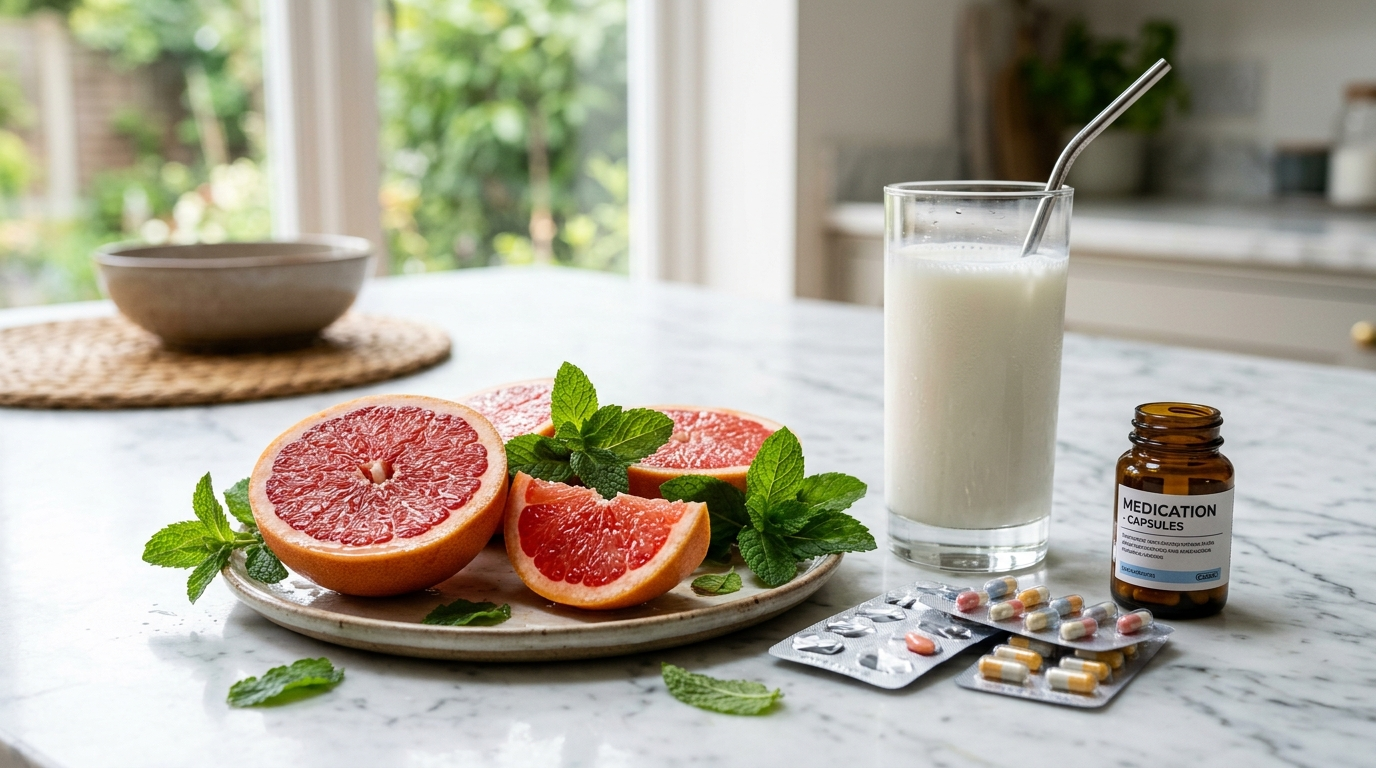
1. The Silent Clash at Dinner: Why Diet Matters in Pharmacotherapy
When patients think about dangerous drug interactions, their minds almost exclusively envision combining two incompatible pharmaceutical pills—such as taking two blood thinners simultaneously or combining sedatives with narcotics. Very few individuals realize that a breakfast bowl of fresh grapefruit, a lunchtime glass of whole milk, or a healthy dinner salad of steamed kale can trigger profound, potentially life-threatening biochemical reactions with everyday prescription medications.
The gastrointestinal tract and the human liver are not passive plumbing conduits. They are active biochemical processing laboratories packed with digestive enzymes, transport proteins, and metabolic catalysts.
Food components can profoundly alter this pharmacokinetics through three primary biochemical pathways: first, by inhibiting or inducing critical liver and intestinal enzymes (such as the Cytochrome P450 family); second, by physically binding to drug molecules in the gut lumen to form insoluble chemical complexes (chelation); and third, by exerting physiological counter-effects that neutralize the therapeutic action of the drug. Understanding these nutritional clashes is essential for every patient managing chronic pharmacotherapy.
2. The Infamous Grapefruit Effect: Furanocoumarins and CYP3A4 Enzyme Destruction
Among all known drug-food interactions, the interaction between grapefruit and prescription medications is by far the most famous, the most heavily researched, and clinically the most dangerous. Discovered serendipitously in 1989 by Canadian clinical pharmacologists testing alcohol interactions, the "grapefruit effect" has since transformed clinical prescribing standards worldwide.
The underlying biochemical culprit is not citric acid or vitamin C, but a class of natural organic chemical compounds called furanocoumarins (notably bergamottin and 6',7'-dihydroxybergamottin). In the epithelial lining of the human small intestine, an abundant metabolic enzyme called Cytochrome P450 3A4 (CYP3A4) serves as a primary frontline defense barrier.
When a patient consumes grapefruit juice or whole grapefruit, furanocoumarins enter the intestinal enterocytes and act as "mechanism-based suicide inhibitors". They chemically bind to CYP3A4 enzymes and permanently destroy them.
Medications heavily endangered by grapefruit include popular cholesterol-lowering statins (atorvastatin, simvastatin, lovastatin), calcium channel blockers for high blood pressure (felodipine, nifedipine, amlodipine), immunosuppressants (cyclosporine, tacrolimus), and antiarrhythmics (amiodarone). Consuming grapefruit with these drugs can trigger acute rhabdomyolysis (severe skeletal muscle breakdown leading to kidney failure), sudden cardiovascular collapse, or severe bradycardia.
Grapefruit & Statin Warning
Spacing your morning grapefruit from your evening statin pill will NOT protect you. Furanocoumarins permanently destroy intestinal CYP3A4 enzymes for up to 72 hours. If your medication label warns against grapefruit, eliminate it entirely from your diet.
3. Dairy, Calcium, and Chelation: How Milk Neutralizes Common Antibiotics
Milk, yogurt, cheese, and calcium-fortified plant beverages are dietary staples celebrated for bone health. Yet when combined with certain life-saving antibiotic classes, dairy products act as potent chemical neutralizers.
This interaction is governed by a physical chemistry phenomenon called chelation. Divalent and trivalent metallic cations—specifically calcium (Ca2+) present abundantly in dairy products, magnesium (Mg2+) in over-the-counter antacids, and iron (Fe2+) in dietary supplements—possess strong electrostatic affinities for specific chemical structures within drug molecules.
When a patient swallows a tetracycline-class antibiotic (such as doxycycline or minocycline) or a fluoroquinolone antibiotic (such as ciprofloxacin or levofloxacin) alongside a glass of milk or a calcium tablet, the positively charged calcium ions bind directly to the antibiotic molecule in the stomach lumen. This forms a large, heavy, insoluble coordination complex (a chelate) that cannot be absorbed across the microvilli of the intestinal wall.
The consequence is clinical treatment failure: up to 80% of the prescribed antibiotic is carried unabsorbed through the bowel and excreted in the feces. A patient taking ciprofloxacin for a severe kidney or urinary tract infection who washes their tablet down with a glass of milk may experience persistent, uncontrolled bacterial sepsis because the therapeutic drug never reached the bloodstream.
4. Leafy Greens and Warfarin: The Delicate Coagulation Dance with Vitamin K
Dark leafy greens—including kale, spinach, collard greens, Swiss chard, and Brussels sprouts—are nutritional powerhouses loaded with phytonutrients. However, for patients taking the oral anticoagulant warfarin (Coumadin) to prevent fatal pulmonary embolisms, strokes, or deep vein thrombosis, sudden changes in leafy green consumption can be lethal.
Warfarin prevents thromboembolic events by functioning as a Vitamin K antagonist. In the liver, hepatic enzymes utilize reduced Vitamin K to synthesize four essential blood-clotting factors: Factors II (prothrombin), VII, IX, and X.
When a patient on a stable warfarin dose suddenly consumes a large portion of steamed spinach or kale, the influx of dietary Vitamin K directly overcomes warfarin's enzymatic blockade. The liver rapidly resumes synthesizing active clotting factors, driving the patient's INR down from a therapeutic protective range (e.g., 2.0 to 3.0) into a dangerous sub-therapeutic zone (e.g., 1.2), dramatically increasing the risk of an ischemic stroke or recurrent blood clot.
Critically, clinical guidelines do NOT instruct warfarin patients to ban green vegetables entirely. Total elimination causes nutritional deficiencies.
“With warfarin and Vitamin K, consistency is life. You do not need to starve yourself of healthy greens; you simply need to eat the same predictable amount every single week.”
— Anticoagulation Forum Clinical Guidelines
5. The Cheese Effect: Tyramine, MAOIs, and Life-Threatening Hypertensive Crises
One of the most dramatic and historic food-drug interactions in psychiatric pharmacology is colloquially dubbed the "cheese effect". It involves Monoamine Oxidase Inhibitors (MAOIs)—such as phenelzine, tranylcypromine, and isocarboxazid—used in treatment-resistant depression and Parkinson's disease.
Aged, fermented, cured, and pickled foods—including aged cheddar, parmesan, blue cheese, cured salami, pepperoni, soy sauce, and draft beers—accumulate high concentrations of an amino acid derivative called tyramine during protein degradation and fermentation. Normally, when you eat an aged charcuterie board, an enzyme in your gastrointestinal tract called Monoamine Oxidase-A (MAO-A) rapidly oxidizes and destroys tyramine before it can enter the circulatory system.
However, when a patient takes an irreversible MAOI, this protective intestinal enzyme is completely paralyzed. Intact tyramine rushes into systemic circulation, travels to peripheral adrenergic nerve endings, and displaces massive reserves of norepinephrine into the bloodstream.
6. Bananas, Salt Substitutes, and Heart Drugs: The Danger of Hyperkalemia
Bananas, oranges, avocados, potatoes, and "No-Salt" potassium chloride seasoning substitutes are widely celebrated as heart-healthy dietary choices. Yet when combined with certain cardiovascular medications, excessive potassium can disrupt cardiac rhythm.
Angiotensin-Converting Enzyme (ACE) inhibitors (such as lisinopril, ramipril, and enalapril), Angiotensin Receptor Blockers (ARBs like losartan and valsartan), and potassium-sparing diuretics (such as spironolactone and eplerenone) work in part by decreasing the adrenal secretion of aldosterone. Aldosterone is the key hormone responsible for eliminating potassium through the kidneys into the urine while retaining sodium.
When aldosterone is suppressed, the kidneys hold onto potassium. If a patient on high-dose spironolactone and lisinopril simultaneously consumes excessive potassium-rich supplements, drinks multiple potassium-fortified fruit smoothies daily, or liberally seasons food with potassium chloride salt substitutes, serum potassium levels can climb dangerously above 5.5 mEq/L (hyperkalemia).
7. Alcohol and Medicines: Liver Overdrive, CNS Depression, and Metronidazole Sickness
Alcohol (ethanol) is a pharmacologically active substance that interacts with more medications than any other dietary component. These interactions manifest across three major physiological axes:
First, synergistic Central Nervous System (CNS) depression: Alcohol enhances the inhibitory neurotransmitter GABA. When combined with benzodiazepines (alprazolam, lorazepam), z-drugs (zolpidem), muscle relaxants, or narcotic opioids, the combination dramatically depresses the brainstem respiratory center, leading to fatal accidental asphyxiation.
Second, accelerated hepatotoxicity: Acetaminophen (paracetamol) is metabolized in part into a toxic reactive intermediate called NAPQI, which is safely neutralized by liver glutathione. Chronic alcohol consumption induces the CYP2E1 enzyme while depleting liver glutathione stores.
Third, the disulfiram-like acetaldehyde reaction: Certain antimicrobial agents—most famously metronidazole (Flagyl), tinidazole, and cephalosporins with a methylthiotetrazole ring—inhibit the enzyme aldehyde dehydrogenase. Consuming even minuscule amounts of alcohol (including alcohol found in medicinal syrups or mouthwashes) causes toxic acetaldehyde to accumulate rapidly in the blood, provoking violent projectile vomiting, intense facial flushing, throbbing headaches, and chest palpitations within 10 minutes.
Zero Alcohol with Metronidazole
Do not consume any alcohol—including beer, wine, spirits, alcohol-containing cough syrups, or cooking wines—while taking metronidazole and for at least 48 hours after your final dose to prevent violent nausea and vomiting.
8. The Comprehensive Top 10 Food-Drug Interaction Safety Matrix
To help patients, families, and healthcare professionals safeguard their daily nutrition against dangerous pharmacotherapeutic clashes, here is the definitive clinical summary table of the top 10 food-drug interactions:
| Food / Beverage Item | Affected Drug Classes | Biochemical Mechanism | Clinical Manifestation & Safe Action |
|---|---|---|---|
| Grapefruit & Seville Oranges | Statins, Calcium Channel Blockers, Immunosuppressants | Furanocoumarins irreversibly destroy intestinal CYP3A4 enzymes | Massive drug overdose; rhabdomyolysis or hypotension; avoid completely |
| Dairy Products (Milk, Cheese) | Tetracyclines (doxycycline), Fluoroquinolones (ciprofloxacin) | Calcium polyvalent cations chelate antibiotic into unabsorbable salt | Antibiotic failure; separate ingestion by at least 2 to 4 hours |
| Leafy Green Vegetables | Warfarin (Coumadin) blood thinner | Dietary Vitamin K overcomes VKORC1 blockade, producing clotting factors | Decreased INR, blood clot risk; maintain strict consistent weekly intake |
| Aged Cheeses & Cured Meats | MAOI Antidepressants (phenelzine, tranylcypromine) | Paralyzed intestinal MAO-A allows tyramine into systemic circulation | Hypertensive crisis, stroke risk; adhere strictly to low-tyramine diet |
| Potassium Salt Substitutes | ACE Inhibitors, ARBs, Spironolactone | Suppressed renal aldosterone secretion impairs potassium excretion | Hyperkalemia, cardiac arrest; avoid potassium salt substitutes |
| Alcohol (Ethanol) | Metronidazole, Tinidazole | Inhibition of aldehyde dehydrogenase causes acetaldehyde buildup | Violent vomiting, severe flushing; avoid alcohol during & 48h after |
| Alcohol (Ethanol) | Opioids, Benzodiazepines, Sleeping Pills | Synergistic central nervous system GABA receptor depression | Fatal respiratory depression and coma; zero alcohol permitted |
| Alcohol (Ethanol) | Acetaminophen (Paracetamol) | CYP2E1 enzyme induction paired with liver glutathione depletion | Accelerated toxic NAPQI buildup, acute fatal liver failure |
| Cranberry Juice | Warfarin, Atorvastatin | Inhibition of hepatic CYP2C9 delays warfarin elimination | Elevated INR, spontaneous internal bleeding; moderate intake |
| High-Fiber Bran Cereals | Levothyroxine, Digoxin | Physical insoluble fiber adsorption binds drug molecules in stomach | Hypothyroidism relapse; take levothyroxine 60 min before breakfast |
Key Clinical Takeaways for Patients
- Dietary components alter drug safety via three main mechanisms: intestinal enzyme inhibition, physical chelation binding, and physiological receptor antagonism.
- Grapefruit and Seville oranges contain furanocoumarins that irreversibly destroy intestinal CYP3A4 enzymes, raising blood levels of statins and calcium channel blockers by up to 300%.
- Dairy products, calcium supplements, and antacids chemically bind (chelate) tetracycline and fluoroquinolone antibiotics, rendering them unabsorbable in the gut.
- Vitamin K-rich leafy greens (kale, spinach, broccoli) directly counteract the anticoagulant action of warfarin, requiring consistent daily dietary intake rather than erratic restriction.
- Aged cheeses and cured meats contain tyramine, which provokes lethal hypertensive crises when combined with Monoamine Oxidase Inhibitor (MAOI) antidepressants.
Medical Disclaimer: Medical Disclaimer: This article is published solely for educational, health literacy, and informational purposes. Theprescription is not a certified medical device and does not dispense medical advice. Patients must never alter, stop, or initiate prescription medications without direct clinical consultation with a licensed physician and dispensing pharmacist. Originally published on Theprescription.