Chronotherapy & Medicine Timing: The Biological Clock That Determines When to Take Your Pills
How Circadian Rhythms, Peak Enzyme Production, and Nocturnal Blood Pressure Surges Shape Optimal Drug Efficacy and Minimize Adverse Side Effects
How Circadian Rhythms, Peak Enzyme Production, and Nocturnal Blood Pressure Surges Shape Optimal Drug Efficacy and Minimize Adverse Side Effects
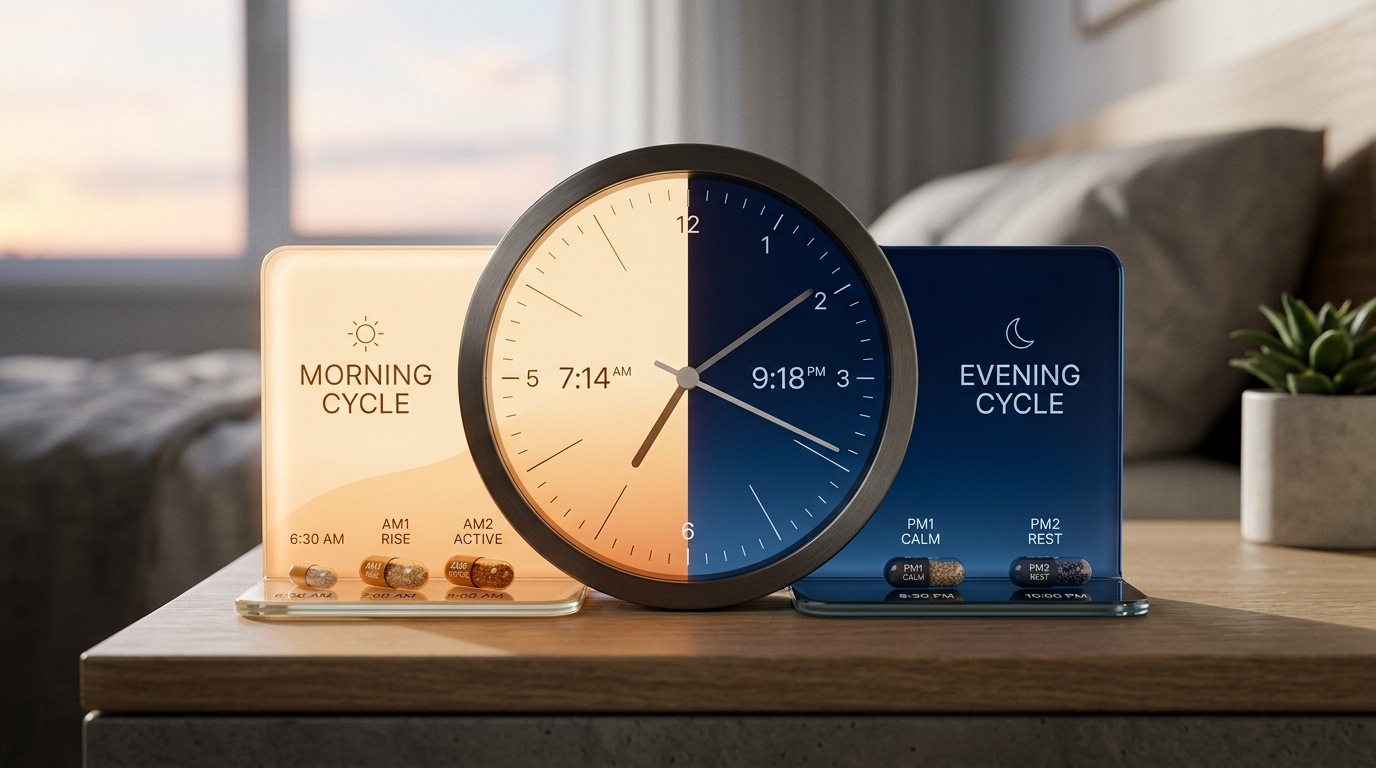
1. The Ticking Clock Inside Your Cells: What Is Chronotherapy?
For generations, standard clinical medicine operated on a convenient but physiologically flawed assumption: that the human body is a static, unchanging biological machine throughout the 24-hour day. Prescriptions were routinely written with instructions like "take one pill once a day," leaving the exact hour of ingestion up to the patient's random whim.
However, Nobel Prize-winning breakthroughs in circadian biology have revealed that nearly every cell, organ, and tissue in the human body is governed by internal molecular clocks. Coordinated by the suprachiasmatic nucleus (SCN) in the hypothalamus, our body clocks orchestrate rhythmic daily fluctuations in blood pressure, heart rate, gastric acid secretion, renal filtration, hepatic enzyme activity, and hormone release.
This scientific reality has birthed the field of chronotherapy (or chronopharmacology): the discipline of synchronizing the timing of medication administration with the body's biological rhythms. By delivering drugs at the exact time when disease activity peaks and metabolic enzymes are primed, clinicians can achieve superior therapeutic results with lower doses and fewer adverse side effects.
2. Cholesterol Synthesis at Midnight: Why Statins Belong at Bedtime
The most established and celebrated application of chronotherapy in primary care involves 3-hydroxy-3-methylglutaryl-coenzyme A (HMG-CoA) reductase inhibitors, universally known as statins.
In the human liver, the synthesis of endogenous low-density lipoprotein (LDL) cholesterol is not constant. Hepatic HMG-CoA reductase enzyme activity follows a pronounced circadian rhythm, peaking during the late night and early morning hours (between midnight and 5:00 AM), coinciding with the overnight fasting state.
For short-acting statins with short half-lives of 2 to 4 hours—such as simvastatin (Zocor), pravastatin (Pravachol), and lovastatin (Mevacor)—timing is everything. If a patient takes simvastatin at 8:00 AM, the drug is metabolized and eliminated from the bloodstream by mid-afternoon. By midnight, when the liver's cholesterol factories roar to life, virtually no active drug remains to block them!
Clinical trials confirm that taking short-acting statins at bedtime produces significantly greater LDL cholesterol reduction compared to morning administration. In contrast, newer long-acting statins like atorvastatin (Lipitor) and rosuvastatin (Crestor) have terminal half-lives of 14 to 20 hours, remaining active around the clock and allowing flexible dosing at any consistent time of day.
The Statin Timing Rule
Short-acting statins (simvastatin, pravastatin, lovastatin) MUST be taken at bedtime to target peak midnight cholesterol synthesis. Long-acting statins (atorvastatin, rosuvastatin) can be taken at any consistent time.
3. Cardiovascular Chronobiology: Surviving the Dangerous Morning Blood Pressure Surge
The cardiovascular system is under intense circadian governance. Under normal physiological conditions, arterial blood pressure exhibits a healthy nocturnal "dip" of 10% to 20% during sleep. However, approximately 2 to 3 hours prior to waking, the sympathetic nervous system activates, cortisol levels surge, and vascular tone tightens, producing a sharp "morning blood pressure surge".
Epidemiological data demonstrates that this morning surge correlates with a massive spike in cardiovascular catastrophes: catastrophic myocardial infarctions (heart attacks), ruptured aneurysms, and ischemic strokes occur roughly three times more frequently between 6:00 AM and 11:00 AM than at any other time of day.
Furthermore, approximately 25% of hypertensive individuals are "non-dippers"—their blood pressure fails to decline overnight, placing immense hydrostatic strain on delicate cerebral and renal microvasculature. Groundbreaking clinical trials (including the landmark Hygia Chronotherapy Trial) demonstrated that taking at least one prescribed blood pressure medication at bedtime significantly reduced nocturnal hypertension, converted non-dippers to healthy dipping profiles, and slashed cardiovascular mortality by nearly 45% compared to morning-only dosing.
4. Respiratory Dips: Why Asthma and COPD Flare Up at 4:00 AM
Pulmonary patients are intimately familiar with the terrifying phenomenon of nocturnal asthma: waking up gasping for breath, coughing, and wheezing in the dead of night, typically between 3:00 AM and 5:00 AM.
This is driven by circadian physiology. In the early morning hours, circulating levels of endogenous anti-inflammatory cortisol reach their 24-hour nadir (lowest point), while circulating adrenaline drops. Simultaneously, cholinergic parasympathetic tone increases, causing bronchial smooth muscles to constrict and airway secretions to thicken.
Chronotherapy directly addresses this vulnerable window: taking once-daily leukotriene receptor antagonists (such as montelukast / Singulair) in the evening ensures maximum therapeutic blockade of inflammatory leukotrienes precisely at 4:00 AM. Similarly, scheduling maintenance inhaled corticosteroids in the late afternoon or evening provides robust anti-inflammatory shielding against nocturnal bronchospasm.
5. The Morning Stiffness Mystery: Timing Anti-Inflammatories for Arthritis
Patients living with rheumatoid arthritis and inflammatory joint diseases frequently endure severe morning stiffness and agony, often requiring an hour or two just to loosen stiff fingers and knees enough to get out of bed.
This morning agony is orchestrated by pro-inflammatory cytokines, specifically Interleukin-6 (IL-6). In patients with autoimmune arthritis, serum IL-6 levels begin to surge around 2:00 AM, peaking at 6:00 AM and sparking intense synovial inflammation by the time the alarm clock rings.
If a patient waits until 8:00 AM breakfast to swallow an NSAID or modified-release prednisone, the pill takes 1 to 2 hours to absorb, meaning relief does not arrive until mid-day. Chronotherapeutic modified-release tablets engineered to be swallowed at 10:00 PM with an automated 4-hour delay release the drug into the bloodstream at 2:00 AM, pre-empting the cytokine surge and allowing patients to wake up with pain-free, mobile joints.
6. Adrenal Synchronization: Why Prednisone Must Be Taken with Breakfast
While bedtime dosing works wonders for statins and arthritis drugs, other medications must strictly be taken in the early morning to protect the body's endocrine system—most notably oral corticosteroids like prednisone and methylprednisolone.
The hypothalamic-pituitary-adrenal (HPA) axis operates on an exquisitely sensitive circadian loop. Natural endogenous cortisol production begins rising around 4:00 AM and peaks sharply at 8:00 AM, helping us awaken with energy. Cortisol levels then decline steadily throughout the day, reaching near-zero at midnight.
When you take exogenous steroid tablets (prednisone) in the morning with breakfast, you mimic this natural physiological cortisol crest. Your brain perceives the steroid dose as normal morning hormone release. In contrast, if you take oral prednisone at night before bed, the high nighttime steroid levels shock the HPA axis, shutting down natural pituitary ACTH secretion and leading to profound adrenal gland atrophy and severe daytime insomnia. Unless specifically directed for acute oncology protocols, systemic steroids belong with morning breakfast.
Steroids Belong with Breakfast
Always take oral prednisone or dexamethasone in the morning with food. Nighttime dosing causes insomnia and suppresses your body’s natural adrenal hormone production.
7. The Master Chronotherapy Prescription Timing Reference Guide
Here is a clinical quick-reference summary outlining the optimal administration timing for major medication classes based on circadian pharmacology:
| Medication Class / Drug | Optimal Time of Day | Circadian Biological Mechanism | Primary Clinical Benefit |
|---|---|---|---|
| Short-acting Statins (simvastatin) | Bedtime (10:00 PM) | Hepatic cholesterol synthesis peaks between midnight & 5:00 AM | Significantly greater LDL reduction |
| Antihypertensives (ACEi, ARBs) | Evening / Bedtime (as advised) | Blunts morning surge, converts non-dippers to healthy profile | 45% reduction in cardiovascular events |
| Oral Corticosteroids (prednisone) | Morning with Breakfast (8:00 AM) | Mirrors endogenous cortisol peak; prevents adrenal suppression | Minimizes insomnia & adrenal atrophy |
| Diuretics (furosemide) | Morning (7:00 AM - 8:00 AM) | Promotes daytime fluid excretion during active waking hours | Prevents nocturnal sleep-disrupting urination |
| Proton Pump Inhibitors (omeprazole) | 30-60 min before Breakfast | Parietal cell proton pumps are newly synthesized and active | Superior 24-hour gastric acid suppression |
| Montelukast (Singulair) | Evening (8:00 PM - 9:00 PM) | Counteracts nocturnal inflammatory leukotriene surge at 4:00 AM | Prevents early morning asthma attacks |
| Sedating Antihistamines | Bedtime (9:00 PM - 10:00 PM) | CNS H1 receptor antagonism promotes natural somnolence | Treats nocturnal itching; prevents daytime fatigue |
| Thyroid Hormone (levothyroxine) | First thing upon waking (empty stomach) | Requires acidic empty gut unhindered by food, coffee, or calcium | Optimal thyroid hormone absorption |
8. How to Align Your Daily Medication Schedule with Your Body Clock
Transitioning to a chronotherapeutic mindset does not mean randomly rearranging your medication schedule on your own. Follow these clinical steps to optimize your daily routine safely:
First, conduct an inventory of your current medicines with your primary care physician or pharmacist. Ask: "Are any of my chronic medications sensitive to the time of day I take them? Would shifting my statin or blood pressure pill to evening improve my outcomes?"
Second, never shift insulin, diabetic sulfonylureas, or blood thinners without direct clinical supervision, as changing these administration times can provoke dangerous hypoglycemia or bleeding risks.
Third, establish a predictable daily sleep-wake cycle. Because circadian pharmacology relies on consistent biological rhythms, maintaining regular meal times and sleep hours reinforces your body's metabolic efficiency.
Finally, utilize digital health tools like Theprescription. By analyzing your prescription images, our platform can generate an optimized chronological schedule that spaces conflicting medications, highlights meal requirements, and aligns your treatments with your body's natural circadian clock.
In routine clinical practice, active patient engagement represents the single greatest safeguard against preventable medication errors. When individuals take time to review their prescription orders, verify the correct indications, and clarify all ambiguous instructions prior to leaving the medical clinic, treatment adherence improves dramatically while adverse drug reactions decline.
Key Clinical Takeaways for Patients
- Chronotherapy aligns drug administration schedules with endogenous 24-hour circadian biological rhythms to maximize therapeutic efficacy and minimize toxic side effects.
- Short-acting cholesterol statins (simvastatin, pravastatin) should be taken at bedtime because hepatic HMG-CoA reductase enzymes synthesize cholesterol predominantly at night.
- The "morning blood pressure surge" between 6:00 AM and 10:00 AM triggers the highest incidence of myocardial infarctions and ischemic strokes, warranting strategic antihypertensive timing.
- Asthma exacerbations peak at 4:00 AM due to nocturnal drops in endogenous cortisol and airway caliber, making evening leukotriene inhibitors and inhaled steroids vital.
- Corticosteroids (such as prednisone) should be taken with breakfast around 8:00 AM to mirror natural adrenal cortisol production and prevent adrenal insufficiency.
Medical Disclaimer: Medical Disclaimer: This article is published solely for educational, health literacy, and informational purposes. Theprescription is not a certified medical device and does not dispense medical advice. Patients must never alter, stop, or initiate prescription medications without direct clinical consultation with a licensed physician and dispensing pharmacist. Originally published on Theprescription.