The Anatomy of a Prescription: What 'Rx', 'Sig', 'Disp', and DEA Numbers Actually Mean
A Structural Tour of a Medical Order: Superscription, Inscription, Subscription, Signa, and the Legal Safeguards Built into Every Doctor Slip
A Structural Tour of a Medical Order: Superscription, Inscription, Subscription, Signa, and the Legal Safeguards Built into Every Doctor Slip
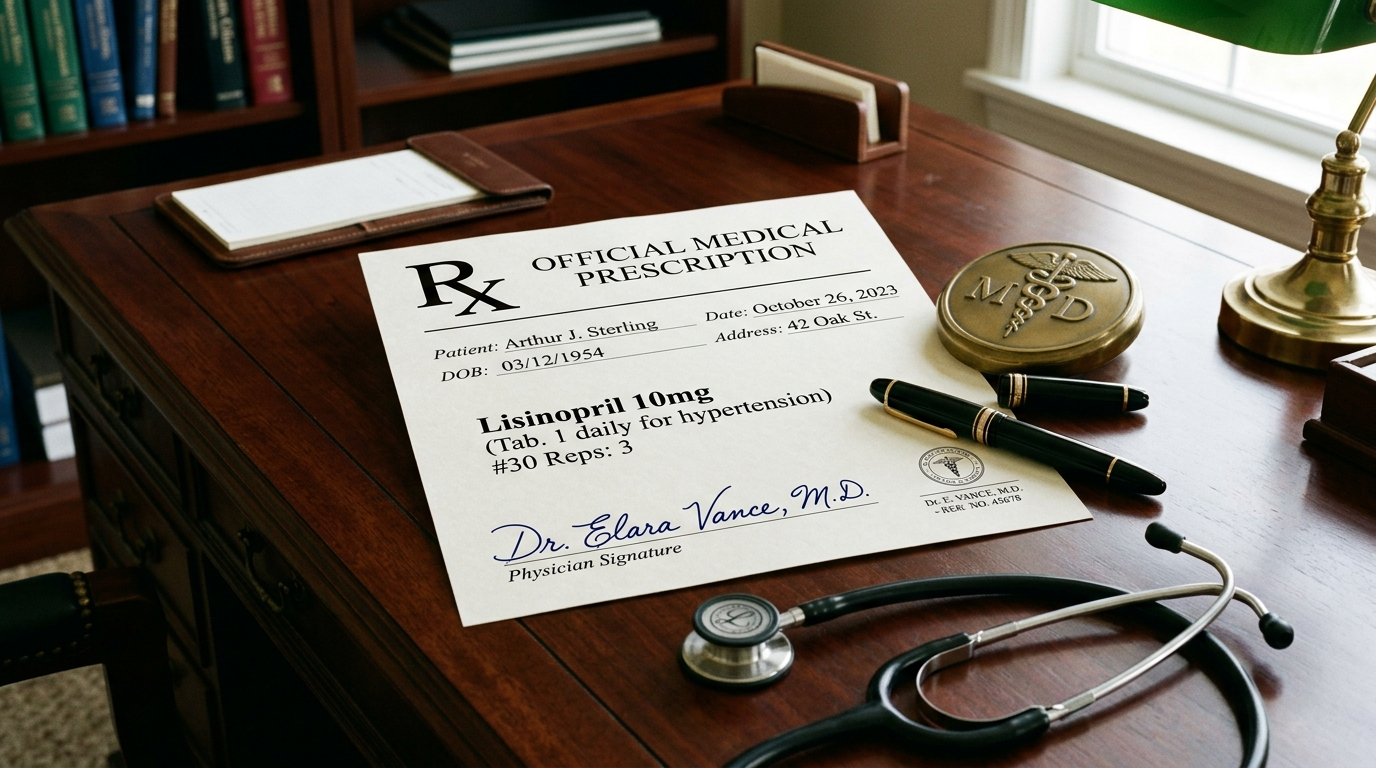
1. The Legal Contract in Your Hand: What Is a Prescription?
To a patient leaving an outpatient consultation room, a prescription slip may feel like a simple permission slip—a piece of paper or an electronic token that allows you to buy a box of pills at the corner chemist. In statutory law and pharmaceutical science, however, a prescription is an intensely regulated, legally binding clinical order.
A prescription is a formal written or electronic communication between a licensed practitioner (physician, dentist, nurse practitioner, physician assistant, or veterinarian) and a licensed pharmacist. It authorizes the pharmacist to prepare and dispense a controlled medicinal therapy to a specific individual under strict statutory standards.
Whether etched onto paper with a physician's fountain pen or transmitted securely through an encrypted National Electronic Prescribing network, every prescription is constructed upon a classical architectural framework developed over hundreds of years. In this educational breakdown, we dissect the anatomical anatomy of a prescription slip, demystify its Latin headings, and examine the legal protections that keep patients safe from medication fraud and dispensing errors.
2. The Superscription: The Myth and Latin Reality of the "Rx" Symbol
At the top left of almost every prescription blank in the world sits an iconic, instantly recognizable glyph: the capital letter "R" crossed with a diagonal tail, forming the symbol "Rx". Where does this ubiquitous medical emblem come from?
Medical history reveals two fascinating intertwined origins. The primary linguistic origin derives from the Latin imperative verb "Recipe", which translates literally as "Take thou" or "Take this". In medieval apothecary practice, the physician opened the prescription by formally commanding the apothecary to take specific raw botanicals, minerals, and solvents to compound a medicine for the patient.
A secondary romantic historical theory links the crossed "R" to the ancient Egyptian symbol the "Eye of Horus" (Wedjat), a sacred hieroglyphic emblem of protection, healing, and restored physical wholeness. In Roman times, physicians often invoked Jupiter (Jove) at the heading of their medical slips by writing an abbreviation that resembled a crossed R, pleading for divine blessings upon the remedy. Today, the Superscription encompasses the Rx symbol along with the patient's identifying data: full legal name, date of birth, home address, and date of writing.
The Meaning of Rx
The "Rx" symbol comes from the Latin verb "Recipe", meaning "Take thou." It historically instructed the apothecary to take specific medicinal ingredients to compound a healing formulation.
3. The Inscription: Specifying the Drug Molecule, Strength, and Form
Directly beneath the Superscription lies the heart of the prescription: the Inscription. This is the section that identifies the exact pharmaceutical substance to be dispensed.
A legally complete Inscription must clearly state three distinct elements: the medication name (preferably written by its non-proprietary active generic salt, e.g., amlodipine besylate, though brand names like Norvasc are often written), the precise milligram or microgram strength (e.g., 5 mg, 500 mg, or 100 mcg), and the pharmaceutical dosage form (e.g., oral tablet, delayed-release capsule, aqueous nasal spray, or transdermal patch).
If a physician simply writes "Metformin" without stating 500mg, 850mg, or 1000mg, or fails to specify whether it is standard immediate-release or extended-release (ER), the prescription is legally incomplete. The pharmacist cannot guess; they are legally mandated to contact the prescribing doctor to verify the intended formulation.
4. The Subscription (Disp): Directives for the Dispensing Pharmacist
The third classical segment of the prescription is the Subscription, frequently abbreviated on modern paper slips simply as "Disp:" or "Mitte:" (Latin for "send").
The Subscription contains specific compounding and dispensing directives addressed directly from the physician to the pharmacist. It dictates the total quantity of medication to dispense—such as "Disp: #30 (thirty) tablets" or "Disp: 100 mL oral suspension". In jurisdictions with strict anti-diversion laws, prescribers are often legally required to write the quantity in both numerals and spelled-out words (e.g., #30 thirty) to prevent drug seekers from altering a "3" to an "8".
The Subscription also indicates the number of authorized refills (e.g., "Refills: 3 times" or "Refills: Zero"). For non-controlled chronic maintenance therapies (like blood pressure or thyroid drugs), physicians often authorize multiple refills covering a year of treatment. For controlled substances with addiction liability (such as Schedule II narcotics like oxycodone or ADHD stimulants like methylphenidate), refills are strictly prohibited by law, requiring a new prescription for each supply.
5. The Signatura (Sig): Translating Clinical Shorthand for the Patient
The fourth and most famous element of a prescription is the Signatura, almost universally marked by the shorthand heading "Sig:" or "Signa" (Latin for "mark" or "label thou").
The Signa contains the explicit directions intended for the patient, which the dispensing pharmacist will type onto the final amber vial or medication box label. This is where clinical shorthand and Latin abbreviations reside: "Sig: 1 tab PO BD PC x 10/7" translates into plain pharmacy English as: "Take one tablet by mouth twice daily after meals for 10 days."
A comprehensive Signa specifies: how many units to take (1 tablet, 2 puffs), the route of administration (by mouth, under the tongue, in both eyes), the daily frequency and spacing (every 8 hours, once daily in the morning), any meal relations (with food, on an empty stomach), and any special precautions (do not crush, shake well before use).
6. Regulatory Safeguards: DEA Numbers, State Licenses, and Tamper-Resistant Paper
At the footer of every prescription slip sits a matrix of clinical credentials and regulatory safeguards designed to authenticate the prescriber's identity and thwart illicit prescription forgery:
1. Prescriber Signature and Date: A physical handwritten pen signature (or an encrypted, two-factor authenticated digital signature under Electronic Prescriptions for Controlled Substances [EPCS] regulations) is legally mandatory. An unsigned slip is legally void.
2. National Provider Identifier (NPI): In the United States, a unique 10-digit identification number assigned to licensed healthcare providers, used by pharmacies to bill insurance plans and track prescribing patterns.
3. DEA Number: Assigned by the Drug Enforcement Administration to practitioners authorized to prescribe controlled substances. A valid DEA number follows a strict mathematical checksum algorithm: pharmacists add the first, third, and fifth digits, then add double the sum of the second, fourth, and sixth digits; the final digit of the resulting sum must match the last digit of the DEA number!
4. Tamper-Resistant Paper: Physical prescription pads are manufactured on specialized security paper containing micro-printed text lines, hidden watermarks that display the word "VOID" when photocopied, and chemical-reactive coatings that stain brightly if someone attempts to erase ink with acetone or bleach.
7. The Four Classical Components of a Medical Prescription
Here is the complete structural anatomy of a clinical prescription summarized in a standardized reference table:
| Prescription Section | Latin Term & Meaning | Clinical Information Contained | Practical Example |
|---|---|---|---|
| Superscription | Recipe ("Take thou") | Rx symbol, patient name, age, address, and date | Rx: John Doe, Age 45, Date: 09/15/2026 |
| Inscription | Inscriptio ("Written down") | Medication name, generic salt, strength, dosage form | Amoxicillin-clavulanate 875/125 mg oral tablets |
| Subscription | Subscriptio ("Underwriting") | Dispensing quantity and refill authorizations | Disp: #20 (twenty) tablets, Refills: 0 (zero) |
| Signatura (Sig) | Signa ("Label thou") | Exact dosing frequency, route, and timing instructions | Sig: 1 tab PO BD with meals x 10 days |
| Prescriber Authentication | Statutory Credentials | Physician signature, license number, DEA#, clinic address | Dr. Jane Smith, MD, Lic# 987654, DEA# BS1234567 |
8. How to Verify That Your Prescription Contains All Legally Required Elements
Before leaving your doctor's office or urgent care clinic, take 30 seconds to inspect your prescription slip (or electronic summary). Verify that these five essential elements are present and legible:
First, check your personal details: ensure your name is spelled correctly and your date of birth is accurate. Pharmacies cannot dispense medications if the patient name does not match government-issued identification.
Second, check the drug name and strength: ensure you can clearly read the medication name and that the milligram strength is stated without ambiguity.
Third, inspect the instructions (Sig): confirm that the frequency, meal relations, and duration are clearly written down.
Fourth, check the refill authorization: if you take this medication for chronic high blood pressure, diabetes, or asthma, ensure your doctor didn't accidentally write "Refills: 0", forcing you to make an extra clinic visit next month.
Fifth, utilize modern health technology. With Theprescription, you can instantly scan your prescription paper to verify all four classical anatomical sections, decipher unreadable handwriting, and ensure full clinical transparency before you step foot in a pharmacy.
In routine clinical practice, active patient engagement represents the single greatest safeguard against preventable medication errors. When individuals take time to review their prescription orders, verify the correct indications, and clarify all ambiguous instructions prior to leaving the medical clinic, treatment adherence improves dramatically while adverse drug reactions decline.
Furthermore, healthcare systems increasingly recognize that health literacy is a cornerstone of effective disease management. Patients who understand the pharmacological rationale behind their dosing schedules, active ingredients, and potential dietary conflicts are far more likely to maintain therapeutic consistency, avoid accidental missed or duplicated doses, and achieve lasting clinical wellness.
Key Clinical Takeaways for Patients
- A valid prescription is a legally binding medical document structured into four classical components: Superscription, Inscription, Subscription, and Signa.
- The universal "Rx" symbol derives from the Latin verb "recipe" ("take thou") and historically links to the protective Eye of Horus in ancient Egyptian medicine.
- The "Sig" (Signa) contains the exact instructions for the patient, translating physician directives into clear daily dosing schedules.
- The "Disp" (Subscription) directs the pharmacist regarding the precise quantity, dosage form, and packaging requirements for dispensing.
- Security elements—including tamper-resistant watermark paper, DEA license numbers, NPI codes, and physician registration seals—prevent fraudulent diversion.
Medical Disclaimer: Medical Disclaimer: This article is published solely for educational, health literacy, and informational purposes. Theprescription is not a certified medical device and does not dispense medical advice. Patients must never alter, stop, or initiate prescription medications without direct clinical consultation with a licensed physician and dispensing pharmacist. Originally published on Theprescription.